







Impact of heavy machinery on old structures: inspection in Porto Belo
The complexity of interaction between modern works and existing heritage
Real estate expansion in coastal cities, such as Porto Belo, brings technical challenges that transcend the simple execution of a structural project. When heavy machinery, such as backhoes, pile drivers, and compactors, enters operation, the soil acts as a medium for vibration transmission. In sandy soil zones, characteristic of our region, the dissipation of these mechanical waves occurs differently, potentially compromising the integrity of neighboring old structures. WGB Architecture and Engineering notes that the biggest mistake in construction planning is not the choice of machinery, but the negligence in the preliminary diagnostic phase. The lack of rigorous monitoring turns a real estate investment into a judicial liability of astronomical proportions.
The impact of mechanical vibrations is not limited to superficial cracks in plaster. Old structures, often built without modern structural designs or with shallow masonry foundations, are extremely sensitive to differential soil movements. The arrival of a large hydraulic excavator on a confined site alters the effective stress state of the neighboring soil, potentially causing immediate settlement. The role of consulting engineering is precisely to foresee these phenomena, quantifying the risk before the first shovel of earth is removed.
The decisive role of the pre-construction survey as legal protection
The neighborhood survey is an engineering document of invaluable legal value. It consists of the exhaustive documentation of the conservation status of all buildings located in the area of influence of the construction site. In Porto Belo, where the proximity between plots is reduced, this survey must be carried out using precision equipment, including laser scanners and high-resolution cameras. By documenting pre-existing cracks, moisture pathologies, and wall plumbness, WGB creates a technical baseline that protects the builder from fraudulent or unfounded claims after work begins.
It is imperative to mention that, according to the Performance Standard NBR 15575, the responsibility for the integrity of neighboring structures lies with the executor of the work. This regulation establishes clear parameters regarding the service life and stability of buildings, reinforcing that any intervention that alters the physical environment of third parties must be prevented. The survey serves not only to document problems but to map the ‘health history’ of the neighboring building, allowing engineering to choose less invasive foundation solutions if extreme fragility is detected in the surroundings.
BIM methodology and preventive planning as a management tool
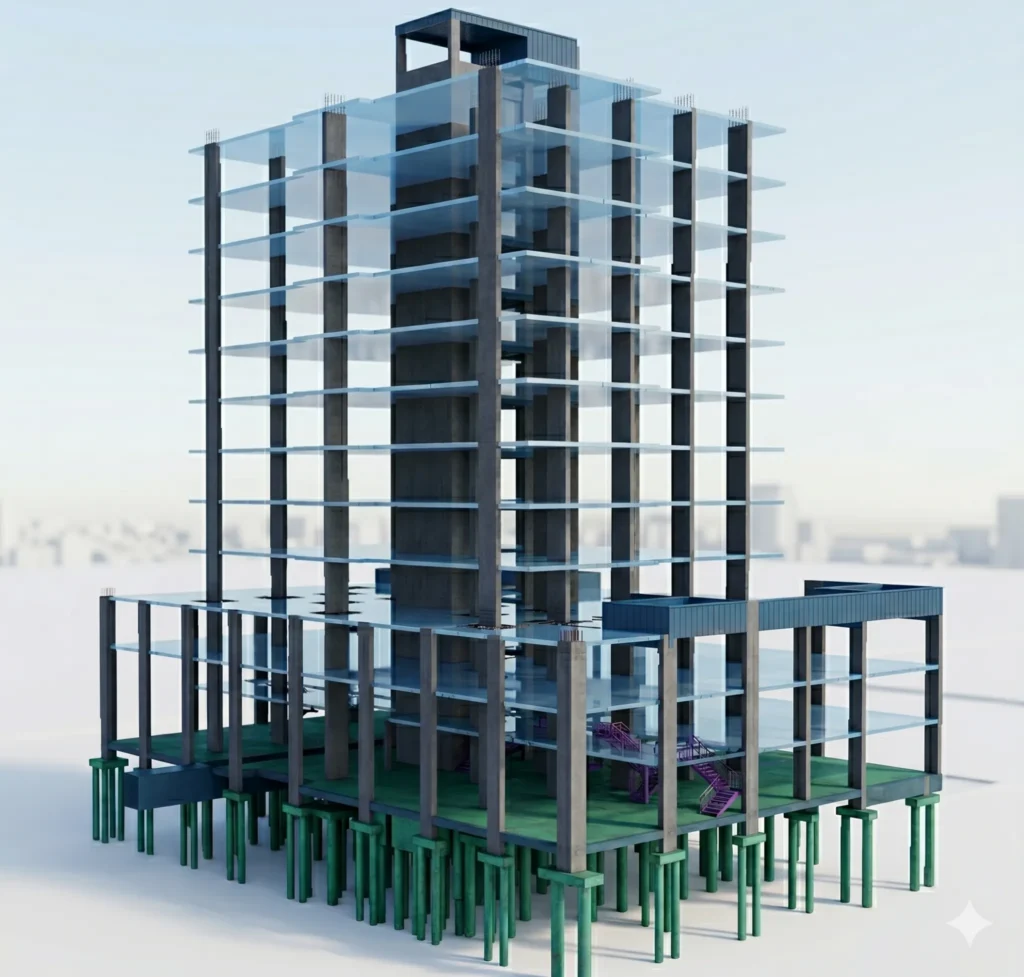
Building Information Modeling (BIM) has revolutionized how WGB manages construction impact. We do not treat the 3D model as a mere presentation drawing, but as an intelligent database for the site. By integrating the physical-financial schedule with the BIM model (4D), we can simulate the impact of heavy machinery traffic in different phases of excavation and foundation. Using analysis tools, we determine routes with the lowest impact on the soil, preventing heavy machinery from moving directly over the areas of greatest structural fragility at the boundary line.
Preventive planning within BIM also allows for the anticipation of technical solutions, such as the execution of sheet pile walls or secant piles before the main excavation. In a geographical context like the surroundings of the Porto Belo Tourist Pier, where the water table is close to the surface, risk management requires surgical precision. BIM allows us to overlay the foundation project with the neighbor’s cadastral topography, identifying potential physical interferences that would cause excessive vibration. This is where the cost of prevention becomes an asset, avoiding rework, shutdowns by inspection agencies, or indemnity lawsuits.
Rigorous cost management and efficiency on site
Many managers see inspection and monitoring as an extra cost, when, in fact, they are the most efficient tools for rigorous cost control. A lawsuit resulting from structural damage to a neighbor can paralyze a project for months, generating financial charges, interest on idle capital, and inactive labor costs. By investing in a mitigation plan, such as the installation of vibration sensors (geophones) or settlement markers, the operational cost is negligible compared to the protection guaranteed to the project’s financial schedule.
WGB Architecture and Engineering implements a risk management protocol that acts on three fronts: detailed technical survey, constant monitoring during heavy machinery operation, and transparent dialogue with the neighborhood. This last point, often neglected, is crucial. A well-informed neighbor who perceives the professionalization of the site is a neighbor less likely to generate unnecessary conflicts. Cost control, therefore, is a direct reflection of mitigating operational and legal risks through technical intelligence.
Technical analysis: the dangers of vibration and engineering response
The propagation of vibratory waves in granular soils, typical of our region, follows non-linear behavior. When heavy equipment enters operation, the compaction or percussion energy is transmitted to the soil layers. If the neighboring foundation is seated on compressible soils, this energy can cause the rearrangement of soil particles (liquefaction or settlement), leading to loss of support. The survey in Porto Belo shows us that old structures, often without rigid footings, suffer differential settlement with minimal fractions of soil movement.
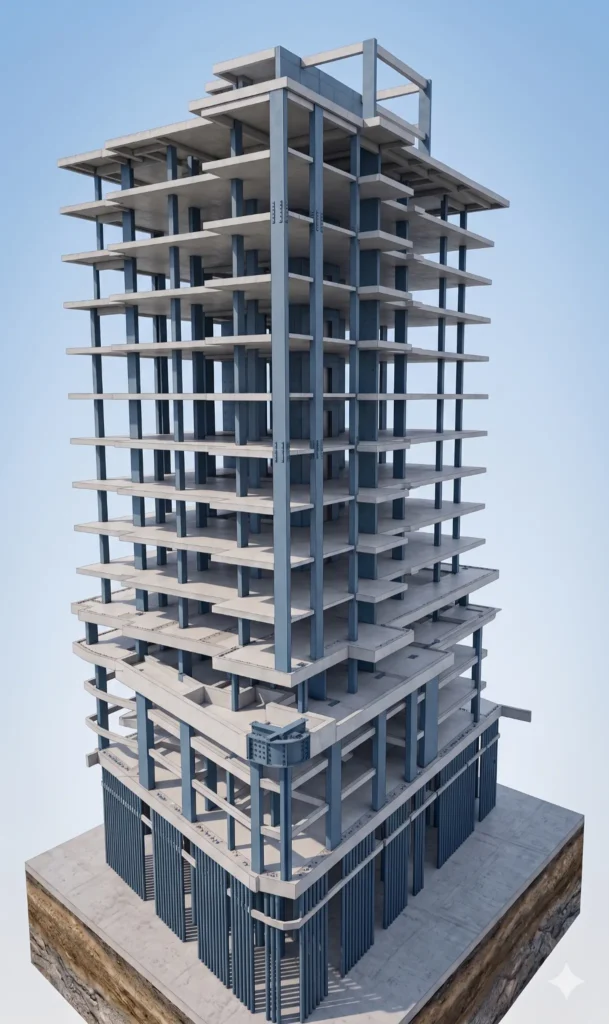
To mitigate this risk, our engineering team evaluates the need to introduce techniques such as pressed pile driving, which replaces percussion pile drivers, virtually eliminating all shock wave propagation. The additional cost of this technology is often absorbed by lower insurance premiums and the peace of mind of a project executed without claims. Modern engineering requires us to be more than builders; we must be environmental managers, respecting the consolidated heritage while raising new towers that define the urban future.
Conclusion: WGB as a strategic partner
Understanding the impact of heavy machinery on the property of others is a demonstration of technical maturity and ethical responsibility. WGB Architecture and Engineering uses its expertise to ensure that civil construction in our region occurs in an orderly, safe, and profitable manner. By aligning technology, current technical standards, and a strategic vision of mitigation, we transform the challenge of the neighborhood into a controlled engineering process. Ensure the longevity of your project with those who are specialists in surveys in Porto Belo, ensuring that the progress of your work goes hand in hand with the preservation of the surroundings and the security of your investment.