



The necessity of neighbor surveys for engineering insurance policies in Blumenau
The strategic relevance of the neighbor survey
In the dynamic construction market, risk mitigation is the pillar that supports the financial viability of any project. In Blumenau, a city characterized by rugged terrain and increasing urban density, the neighbor survey (laudo de vizinhança) has evolved from a mere bureaucratic formality into a critical instrument of corporate governance. As consultants at WGB Architecture and Engineering, we observe daily that the absence of a detailed survey of adjacent structures is the primary catalyst for lawsuits and operational losses. The neighbor survey is a preventive technical document that formalizes the condition of properties adjacent to the construction site before foundation and earthmoving activities begin.
This photographic and descriptive report acts as a “snapshot” of the pre-existing reality, protecting the developer against unfounded claims related to cracks, settlement, or vibrations. When an insurer evaluates the granting of a Civil Liability Works (RC Obras) or Engineering Risks policy, the technical quality of this report is the differentiator that defines the insurance premium. Without it, the insurer may decline coverage due to a lack of technical evidence, leaving the developer exposed to incalculable financial risks. Therefore, the survey is not a cost, but an investment in predictability and asset protection.
The interface between BIM and risk management
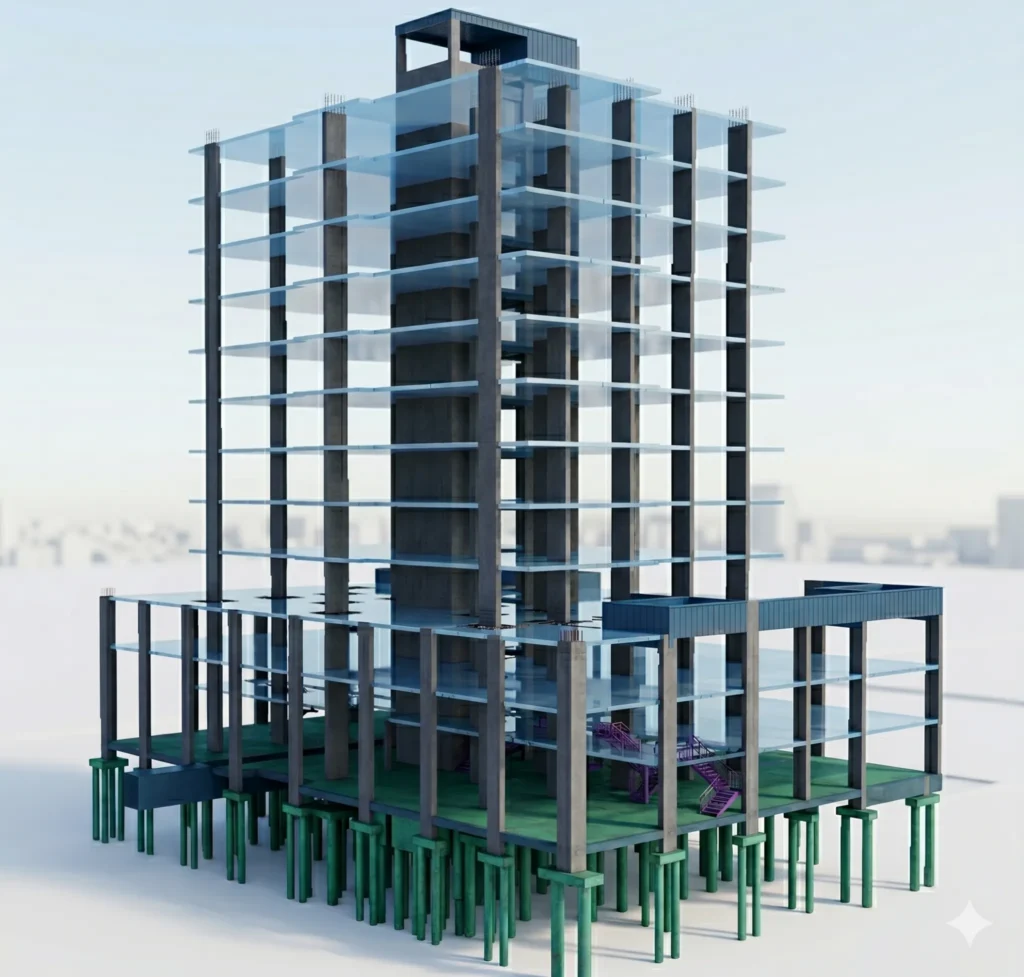
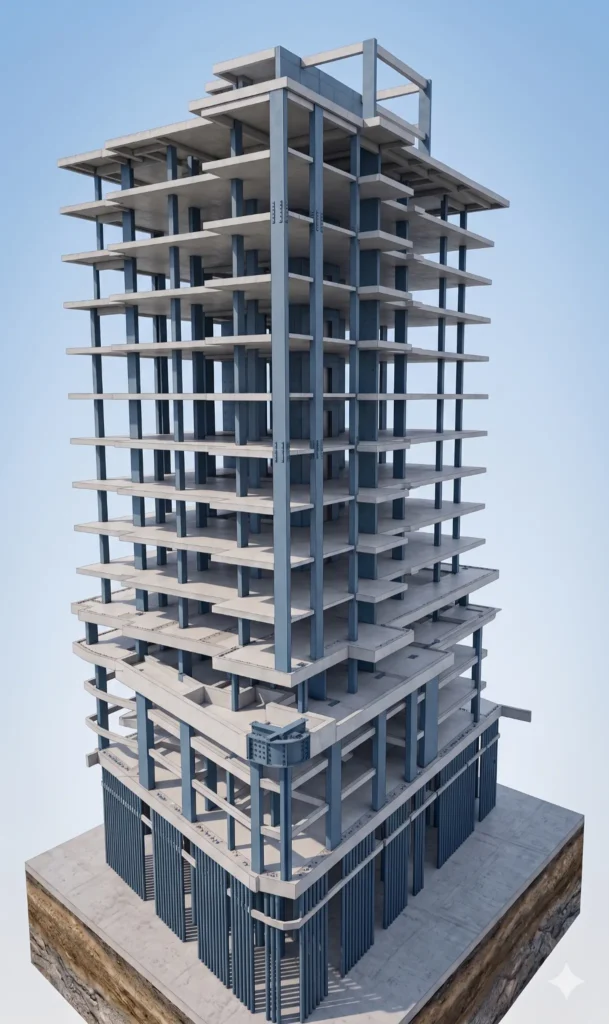
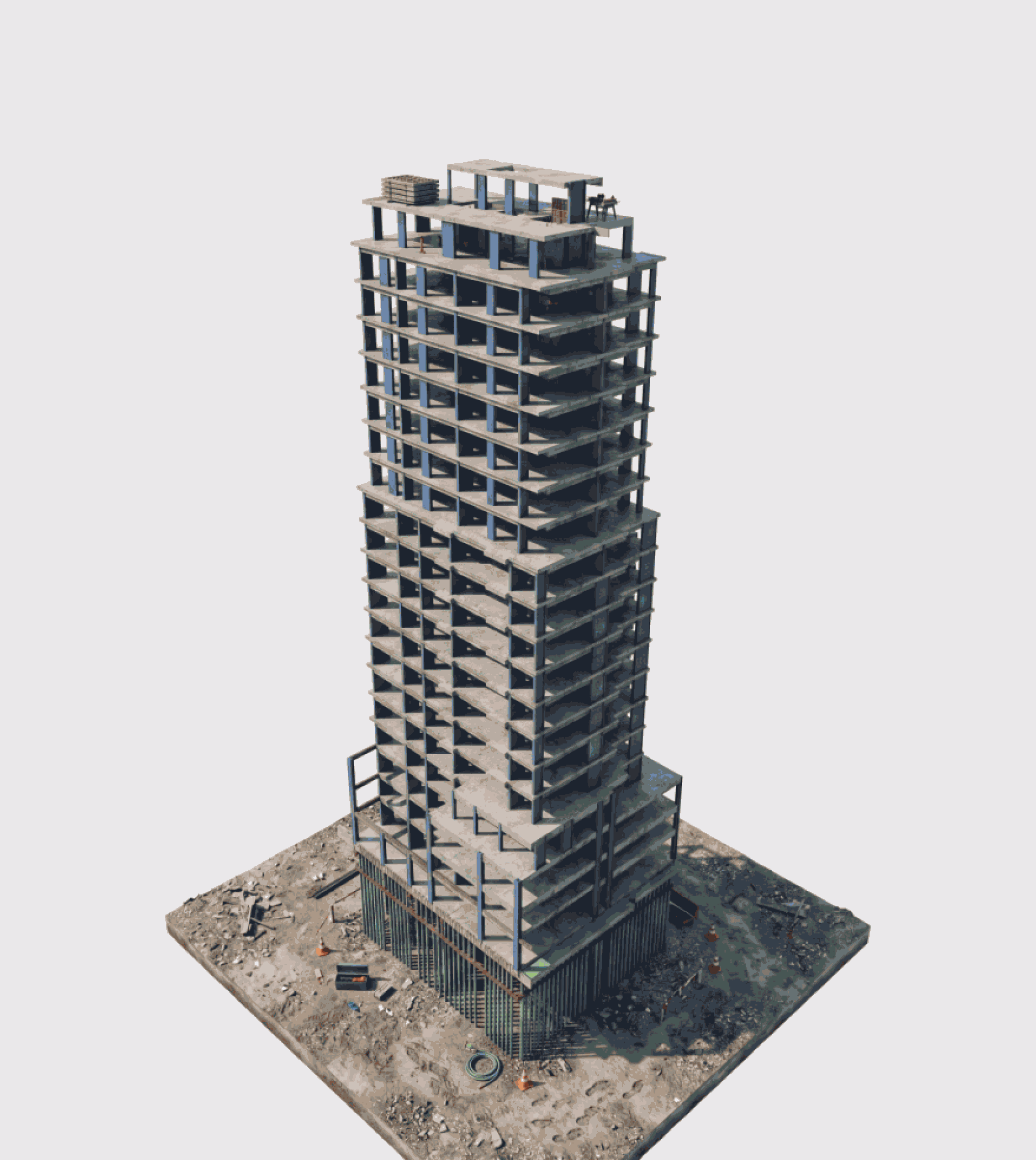
WGB integrates the BIM (Building Information Modeling) methodology not only for project coordination but as a predictive risk management tool. By modeling the surroundings of the site in Blumenau, we can simulate the impact of excavation and structural loading in relation to neighboring buildings. Using BIM allows us to identify conflict points even before the first machine reaches the ground. With the help of point cloud models and georeferenced topography, our team can predict vibration influence zones, allowing for adjustments in the retaining wall design that drastically reduce the chances of pathologies in adjacent structures.
This technological approach acts directly on prevention. By anticipating soil behavior and its interaction with neighboring foundations, we elevate technical safety and reduce the requirements for counter-guarantees by insurers. On a construction site, uncertainty is the greatest enemy of cost. BIM eliminates this gap, providing the project manager with the ability to demonstrate, with precise data, that the work is being executed with maximum technical rigor, which translates into more competitive insurance policies and much faster claim settlement processes.
Regulatory compliance as legal shielding
High-end engineering does not permit negligence. The mandatory nature of the neighbor survey is based on a rigorous regulatory framework that governs the builder’s civil liability. Specifically, NBR 12722 – Discrimination of professional technical services for architecture and engineering – establishes crucial guidelines that steer the preparation of technical documents and risk management in construction. Failure to follow appropriate technical procedures exposes the technical lead to severe administrative and civil sanctions. In Blumenau, where the proximity between buildings is often challenging, compliance with NBR 12722 ensures that the survey of the surroundings is not just a compilation of photos, but a document with unquestionable evidentiary value.
When the insurer requests the survey, it is actually verifying whether the builder followed engineering best practices. Ignoring this step is like trying to cross the Rua XV de Novembro Iron Bridge on a flood day without planning: the risk of collapse is imminent. Professional management, aligned with the standard, ensures that any pathological sign that appears during construction is promptly identified and compared with the initial state. If the damage already existed, the insurer does not pay; if it was caused by the work, risk management allows for agile resolution, avoiding judicial embargos of the enterprise.
Financial impacts and cost control
Inefficiency in managing the neighbor survey often results in an exponential increase in the budget. Imagine a common scenario: a large-scale project starts without detailed documentation of surrounding buildings. In less than thirty days, nearby residents report cracks in their homes. The absence of a solid technical survey forces the builder to assume responsibility for pre-existing damages just to maintain social peace and avoid work stoppages by municipal inspectors. This is a management error that can compromise the profit margin of the entire project.
Strict cost control begins with prevention. At WGB, we structure the neighbor survey within the construction execution plan, treating it as a critical item in the physical-financial schedule. By integrating this step, we can reduce the insurance policy premium through the technical transparency presented to the insurer. Furthermore, detailed documentation reduces the time spent with legal departments and judicial inspections. In a competitive market like Blumenau, where the value per square meter demands maximum efficiency, saving on preventive documentation is, paradoxically, an expensive way to lose capital.
Preventive planning and engineering intelligence
The success of a project in Blumenau depends on a systemic view. The region’s complex topography, marked by hills and valleys, requires extra care regarding the water table and slope stability. The neighbor survey, when performed through the lens of engineering intelligence, transcends the inventory of cracks; it also involves the analysis of public infrastructure and the adjacent drainage network. It is an investigative task that requires technical sensitivity and academic rigor.
The preventive management we apply at WGB focuses on three pillars: constant monitoring, transparent communication with neighbors, and technical documentation updated in BIM. This triad not only meets the requirements of insurance policies but builds a solid reputation for the developer. When the community perceives that the work is conducted with professionalism, the incidence of unfounded complaints drops drastically. The secret is in proactivity: documenting the before is the only guarantee of peace of mind during the execution process.
Modern engineering requires that every decision be supported by data, not assumptions. The use of drones, vibration monitoring sensors (seismographs), and modeling software are the tools that WGB uses to ensure that the neighbor survey is a living tool for risk management. Ultimately, safety is the measure of success for any construction project. By prioritizing excellence in every detail, we protect not only the client’s investment but also the integrity of the structures surrounding the construction site, ensuring that urban development occurs harmoniously and sustainably.
To optimize the management of your assets and ensure total safety in your investments, the team at WGB Blumenau Engineering is ready to implement the best prevention and appreciation strategies for your enterprise.