










The Impact of Pollution on the Structure
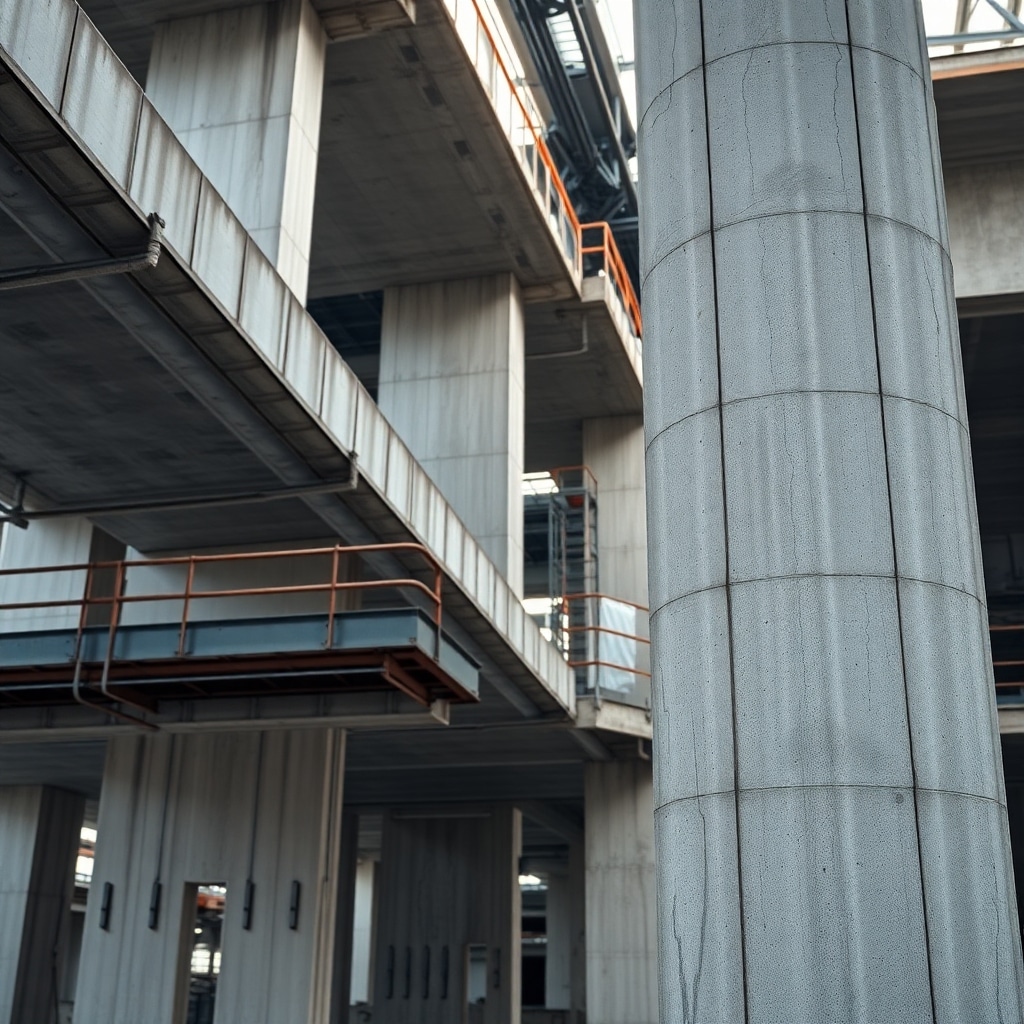
Carbonation of concrete is a silent chemical process. Therefore, it represents one of the greatest risks to the durability of buildings. Furthermore, in industrial zones, the high concentration of CO2 accelerates the penetration of these gases into the porosity of the concrete. As a result, the pH of the cementitious matrix drops drastically. This causes the passivating layer that protects the steel reinforcement to dissolve. Consequently, severe corrosion processes begin.
The Influence of the Environment
Employers and construction companies should consider the surrounding area. For example, structures near the industrial district of Joinville, which concentrates large metallurgical and plastics plants, suffer continuous exposure. Therefore, local air pollution enhances early carbonation. Furthermore, exposed concrete without treatment becomes vulnerable within a few years. Therefore, choosing the right concrete is vital from the foundation up.
Technical Standards as Protection
Engineering demands absolute rigor in quality control. For this reason, it is mandatory to follow the guidelines of... NBR 6118:2014. This standard establishes clear criteria regarding the nominal concrete cover of reinforcement bars. Furthermore, it defines the classes of environmental aggressiveness. Therefore, by designing in accordance with the law, we reduce the chances of future structural failures. Thus, compliance with the standard is not optional, but a technical necessity.
Prevention Strategies
There are efficient methods to avoid catastrophic damage. Firstly, use permeability-reducing additives. Additionally, the application of sealant coatings acts as a physical barrier against polluting gases. On the other hand, proper wet curing ensures a denser and less porous concrete matrix. Finally, preventive maintenance should be performed periodically. To ensure longevity, inspect pillars and beams regularly.
The Importance of Technical Evaluation
WGB Arquitetura e Engenharia recommends constant monitoring. Therefore, the use of pH indicators in concrete allows for precise diagnosis of the carbonation front. Furthermore, quick interventions cost significantly less than complex structural repairs. Therefore, acting preventively is the smartest financial strategy. Ultimately, technical excellence is the only path to durable works.
Count on Experts
Don't ignore the risks of industrial corrosion in your projects. After all, the safety and integrity of your assets depend on rigorous structural monitoring. If you seek to guarantee the maximum lifespan for your building, access here to speak with our team of experts and receive a detailed technical consultation.