

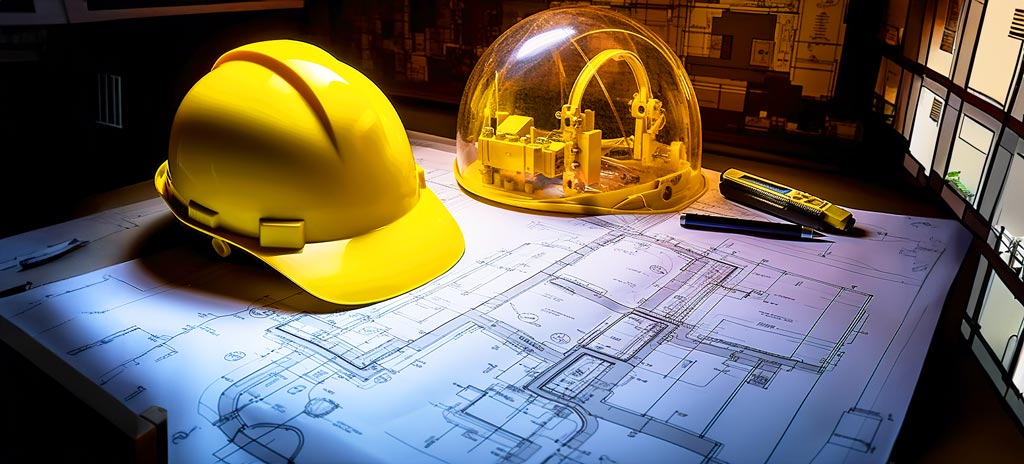
















A engineering It has always been one of the driving forces of human development.
Throughout history, she It spurred social, economic, and urban transformations. that changed the way we live.
In recent years, however, Technological advances have revolutionized the way engineers approach challenges and develop solutions..
Consequently, they arose new possibilities for creating safer, more sustainable and efficient infrastructures.
Thus, this article presents The key innovations that are redefining the future of engineering. and expanding the role of the engineer in modern society.
Artificial Intelligence and Machine Learning
A artificial intelligence (AI) and the machine learning they are profoundly transforming the engineering sector.
These technologies They allow the analysis of large volumes of data in real time., what It improves planning, forecasting, and operational efficiency..
Furthermore, They increase the safety of infrastructure and reduce maintenance costs..
For example:
- AI Systems monitor the integrity of bridges and buildings, issuing alerts before minor defects become major problems.
- Machine learning algorithms simulate extreme environmental conditions and long-term impacts on materials and structures, making the designs more precise.
Like this, Engineers are able to anticipate risks, optimize resources, and improve the performance of buildings..
Therefore, AI doesn't replace engineers; it enhances their analytical and decision-making capabilities..
3D printing
A 3D printing It is becoming established as one of the most disruptive technologies in modern engineering.
With it, it's possible Build complex structures in less time and with less material waste..
Furthermore, The precision of 3D printers allows for the manufacture of customized components. that meet the specific needs of each project.
Among the main benefits, the following stand out:
- Accelerated construction: Entire structures can be completed in just a few days, which significantly reduces execution times and costs..
- Sustainability: since the process is highly controlled, Material waste is minimal., contributing to more environmentally friendly practices.
- Versatility: 3D printing It allows for the creation of innovative and lightweight shapes., previously unfeasible using conventional methods.
Consequently, This technology is opening up space for a new construction paradigm., combining innovation, efficiency and sustainability.
Sustainable Energy and Energy Efficiency
With growing environmental concerns, Engineering has increasingly turned to solutions based on clean energy and energy efficiency..
These practices They reduce environmental impact and promote the intelligent use of natural resources..
Furthermore, They are aligned with global decarbonization and sustainable development goals..
Among the main applications, the following stand out:
- Green Buildings: projects that integrate solar panels, wind turbines and water reuse systems, reducing dependence on non-renewable sources.
- Smart Materials: solutions such photovoltaic glass and concrete that captures CO₂ are helping to to mitigate the effects of urban emissions.
- Energy Infrastructure: to the smart grids optimize consumption and reduce waste in real time.
That way, Engineering plays a key role in the global energy transition., developing resilient and ecologically balanced infrastructures.
Virtual and Augmented Reality
A virtual reality (VR) and the augmented reality (AR) they are redefining the way engineering projects are conceived, designed and executed.
These technologies They allow you to visualize the project even before its physical construction., what It facilitates design adjustments and avoids costly mistakes..
Furthermore, They provide immersive experiences that improve training and communication between teams..
With the use of VR and AR, engineers can:
- View 3D models at real scale., analyzing details and potential interferences before execution.
- Training teams in virtual environments, simulating real-life construction situations without exposing professionals to risks.
- Presenting projects interactively to clients and investors., making the process more engaging and effective.
Like this, The integration of these technologies reduces uncertainty, increases productivity, and transforms the way projects are planned and executed..
Nanotechnology in Engineering
A nanotechnology has been introducing materials with advanced properties, capable of to enhance the performance and durability of buildings..
Furthermore, Its use reduces maintenance costs and improves the thermal and structural efficiency of buildings..
In this way, Innovation is on a microscopic scale, but with a gigantic impact on the sector..
Among the most promising examples, the following stand out:
- Self-compacting and self-healing concretes, that They repair microcracks automatically. and extend the lifespan of the structures.
- Nanostructured coatings, that They protect surfaces against corrosion, moisture, and wear..
- Lightweight and ultra-resistant materials, ideal for aircraft, bridges and large buildings.
Consequently, Nanotechnology expands the creative and technical potential of engineering., making the safest, most efficient and sustainable buildings.
Conclusion
In summary, Technological innovations are redefining the role of engineering in the contemporary world..
These transformations They encourage the creation of smarter, safer, and more environmentally friendly solutions., capable of responding to the challenges of a constantly evolving planet.
Furthermore, Engineers who embrace these changes become protagonists of a new era., where Creativity and efficiency go hand in hand..
Therefore, Adopting technologies such as AI, 3D printing, clean energy, VR, and nanotechnology is essential to building a more sustainable and connected future..
In the end, Engineering not only solves problems, it anticipates needs and builds the path for future generations..