

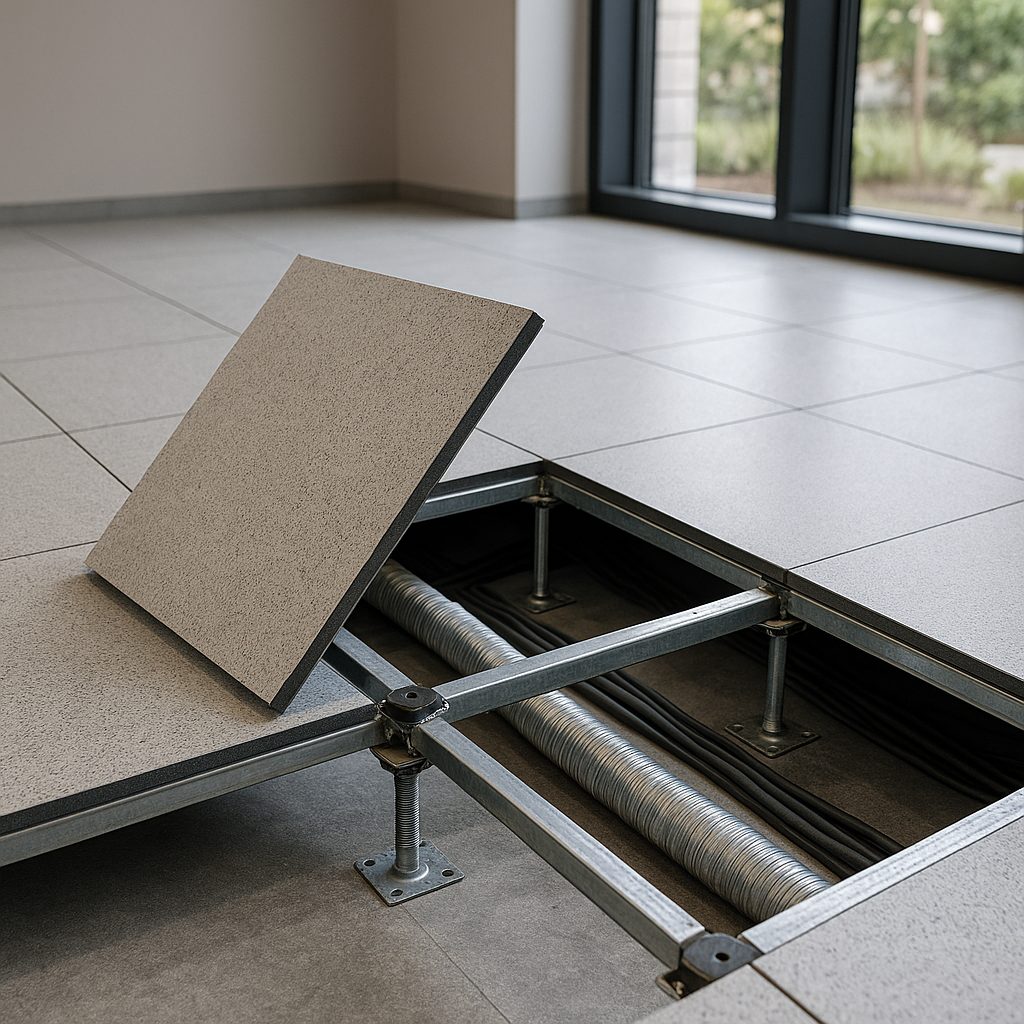
Raised flooring has become standard in corporate, industrial, and technology projects. Furthermore, it creates a free space between the slab and the final finish, allowing for the passage of cables, ducts, and systems without demolition. As a result, the environment gains flexibility, quick adaptation, and long-term cost savings.
1. Complete organization of the facilities
With a raised floor, all electrical, data, light plumbing, and air conditioning systems run beneath the floor. In addition, this keeps the environment clean, facilitates maintenance, and avoids interference with workspaces.
2. Flexibility for rapid changes
Corporate environments are constantly changing. That's why raised flooring adapts to these changes without major construction work. This way, layout changes, new power outlets, and network upgrades can happen without mess or lengthy interruptions.
3. Real gain in operational efficiency
Because access is simple, teams can resolve problems and install new systems in minutes. Furthermore, this agility reduces maintenance costs and minimizes downtime in critical departments.
4. Varied finishes and modern aesthetics
The system accepts porcelain, vinyl, laminate, and special finishes. Therefore, the final aesthetic is the same as a traditional floor, but with an intelligent and fully accessible infrastructure underneath.
5. Cost reduction in the life cycle
The initial investment pays for itself over time. Furthermore, the modular structure avoids rework and eliminates major renovations, bringing predictability and significant cost reduction.
Conclusion
Raised flooring delivers efficiency, organization, and speed. Furthermore, it modernizes any space and reduces operating costs. In current projects, it has become the logical choice: practical, adaptable, and prepared for future demands.