

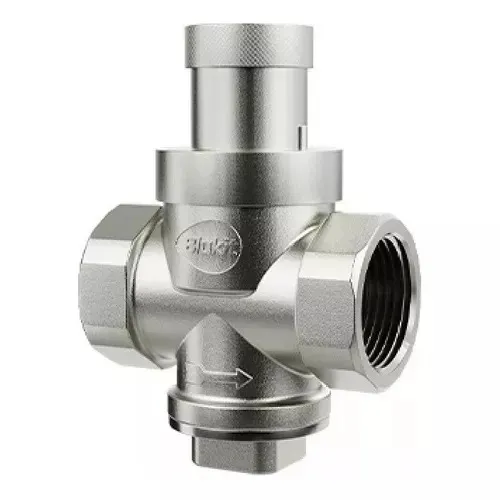













A water pressure reducer controls the pressure coming from the public water supply, thus keeping the plumbing system safe. It prevents impacts, leaks, and premature wear. Furthermore, it reduces malfunctions in faucets, valves, and showers. When the pressure is too high, noises, breakages, and instability occur during daily use.
The equipment reduces the inlet pressure to a constant value. Therefore, it prevents abrupt variations that occur in areas with uneven terrain, tall buildings, steep streets, or neighborhoods supplied by powerful pumps. Thus, the entire network operates within the ideal limit.
When to use
A pressure reducer should be installed when the measured pressure is above the recommended level. Generally, damage begins above 40 mca (meters of water column). Furthermore, in lower floors of buildings and houses near elevated reservoirs, the pressure is usually much higher than normal. Therefore, the use of a pressure reducer becomes necessary.
Signs that you need
- Noise in the pipes
- Faucets that are too strong
- Constant leaks
- Temperature fluctuation in the shower
- Hoses bursting
These signs appear precisely because the network is receiving more pressure than it can handle. Consequently, the risk of damage increases.
Where to install
Ideally, the pressure reducer should be installed right after the water meter or at strategic points in the building. Additionally, using a pressure gauge helps adjust the final pressure, ensuring a stable and safer installation.
Benefits
- It protects the entire network.
- Avoids recurring maintenance.
- Reduce waste
- Improves wearing comfort.
Conclusion
A pressure reducer is simple and efficient. When the pressure exceeds the limit, it becomes indispensable for maintaining safety, comfort, and durability. Therefore, if the pressure in your property is high, a pressure reducer is a direct, economical, and definitive solution.