

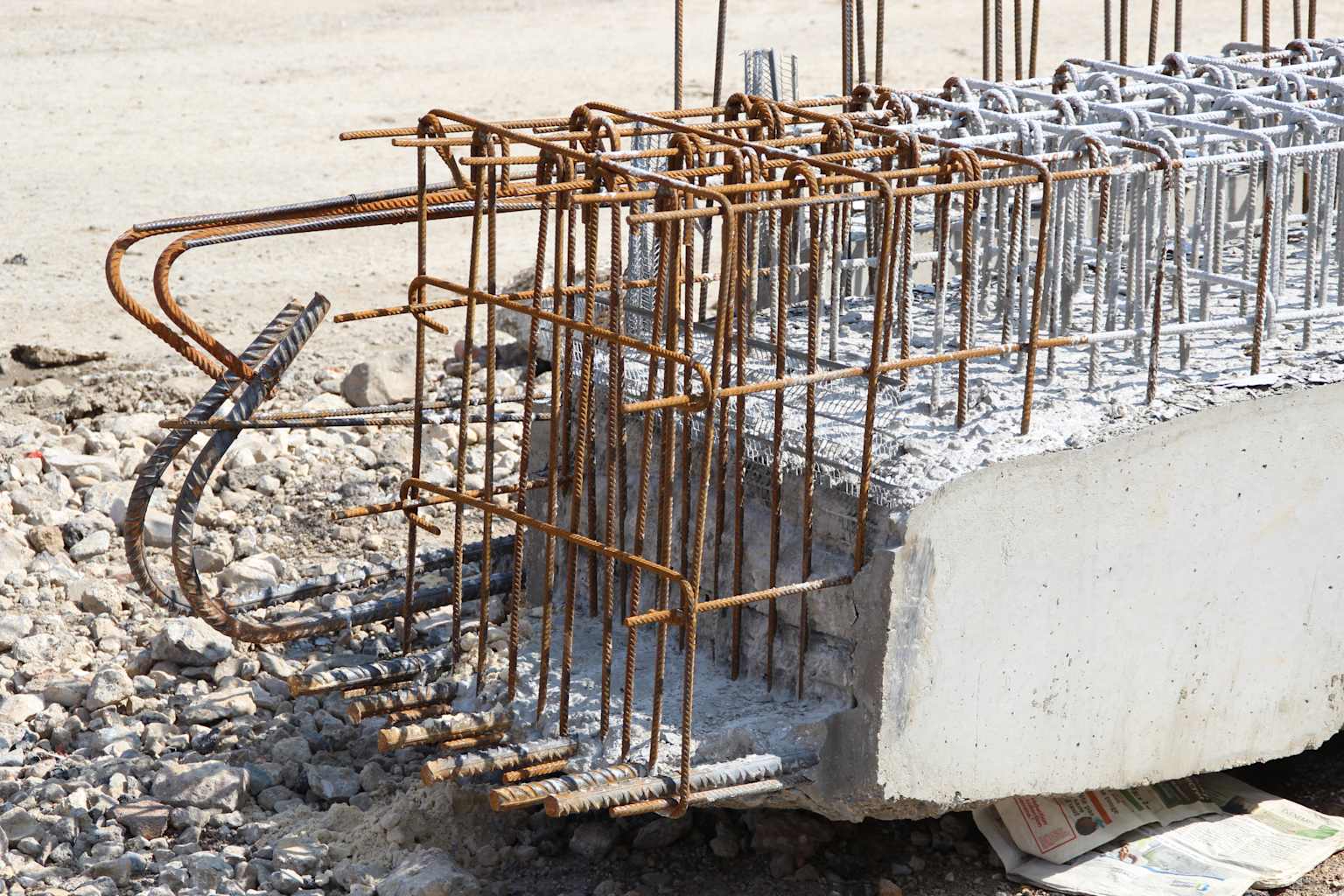
















Concrete reinforcement is the structural element that allows the concrete to withstand tension. Without it, the structure would have extremely limited performance. That's why, Understanding its principles is essential in structural engineering. Furthermore, Proper sizing and positioning of the bars ensure safety, durability, and cost savings.
Throughout this content, the main types of steel, normative criteria, calculation methods, and best practices for execution are addressed.
What is Concrete Reinforcement?
The framework, also called reinforcement, is composed of steel bars positioned according to the structural design. About that, Concrete acts predominantly under compression. That way, Then came reinforced concrete, an efficient and reliable system.
As a result, The steel absorbs tensile stresses, and the concrete protects the reinforcement from corrosion and fire. Consequently, The structure becomes more resistant and durable.
Types of Steel for Armor
In Brazil, the most commonly used steels are CA-50 and CA-60. Nonetheless, Each one has specific applications.
CA-50
It is the most commonly used material in cast-in-place structures. In general, It is used in beams, columns, slabs, and foundations. It has a characteristic strength of 500 MPa and is available in large diameters.
CA-60
CA-60, on the other hand, offers greater mechanical strength. For that reason, It is common in stirrups, trusses, and precast elements, with smaller diameters and high adhesion.
Criteria for choosing between CA-50 and CA-60
The choice depends on the structural type. For example:
- Robust structures → CA-50
- Lightweight or precast elements → CA-60
Like this, This avoids waste and ensures proper performance.
Basic Reinforcement Calculation
First, the linear meterage of the longitudinal bars is calculated.
Next, the number and perimeter of the stirrups are determined.
After that, it is multiplied by the number of structural elements.
Finally, the total length is converted into commercial 12 m bars.
In this way, This provides the actual quantity of steel needed for purchase and control.
Spacing and Coverage
Proper spacing allows for the compaction of the concrete. Furthermore, prevents cracks and adhesion failures.
The coating protects the reinforcement against corrosion. According to NBR 6118, This value varies according to environmental aggressiveness.
Positioning and Execution
Even with correct calculations, assembly errors compromise the structure. That's why, The use of spacers, proper tying, and inspection before concreting is mandatory. Additionally, The entire process must be recorded.
Conclusion
Concrete reinforcement is not just iron within the concrete. In practice, This is a structural system that requires rigorous calculation, standards, and execution. When done well, guarantees safety and a long service life. Otherwise, This leads to serious illnesses and high costs.