

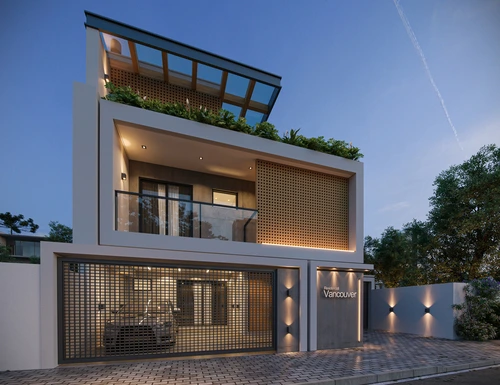
Sustainable architecture is more than a trend; it is a pressing need in the face of growing environmental challenges and current urban pressures. However, its full adoption faces a number of obstacles that require careful analysis and strategic solutions. This article explores the main challenges of sustainable architecture and offers a comprehensive overview of the paths that can be taken to overcome them.
Economic Challenges: The Cost of Innovation
The initial cost of sustainable projects often represents a significant barrier. The investment required to incorporate green technologies and sustainable materials can be considerably higher than for conventional construction. For example, the use of solar panels, water reuse systems, and recycled materials often requires an initial outlay that can discourage investors and clients. Furthermore, the need for a skilled workforce trained in sustainable techniques and materials can also increase costs.
However, it is crucial to recognize that, although the initial cost is high, the long-term benefits can outweigh these challenges. Sustainable buildings tend to have lower operating costs, greater durability, and a more robust return on investment over time. Furthermore, increasingly available tax incentives and government subsidies can help mitigate these initial costs.
Technical Complexity and Technology Integration
Sustainable architecture requires the integration of diverse technologies and complex systems, which can be a significant challenge. Solutions such as renewable energy systems, efficient water management, and the use of recycled materials demand detailed planning and effective coordination among different professionals, such as architects, engineers, and builders.
The technical complexity of these systems can lead to difficulties during the implementation and maintenance phases. To meet this challenge, it is necessary to invest in research and development to improve sustainable technologies and make them more accessible. Furthermore, interprofessional collaboration and continuous training of specialized teams are fundamental to ensuring the successful integration of these solutions.
Regulations and Construction Standards
The evolution of building regulations and standards often does not keep pace with technological innovations in sustainable architecture. In many cases, local and national regulations still do not reflect best practices and advancements in sustainability. This can create challenges for architectural professionals seeking to implement innovative solutions while complying with existing standards.
To overcome this difficulty, it is essential to engage in continuous dialogue with regulatory bodies and participate in processes to update regulations. Advocating for public policies that encourage sustainable practices and collaborating with professional associations can contribute to creating a regulatory environment more favorable to sustainable architecture.
Scalability and Large-Scale Application
While many sustainable architecture projects can be successful on a small scale, applying these solutions to large urban projects or in resource-poor areas can be complex. The scalability of sustainable solutions is a crucial issue, as successful replication in different contexts is essential for widespread adoption.
To meet this challenge, it is important to develop strategies that allow for the effective adaptation and replication of best practices. Research into scalable solutions and the creation of sustainable business models that are viable in different contexts are fundamental steps. Furthermore, collaboration between the public and private sectors can facilitate large-scale implementation, promoting a broader positive impact.
Conclusion
Sustainable architecture represents a crucial step towards a greener and more balanced future. However, overcoming the challenges associated with this practice is essential to achieving its full potential. By addressing economic, cultural, technical, regulatory, and scalability barriers, it is possible to move towards a scenario where sustainability is not just an option, but a norm. The combination of innovation, education, collaboration, and regulatory adaptation will allow sustainable architecture to establish itself as the foundation for responsible and environmentally conscious urban development.