
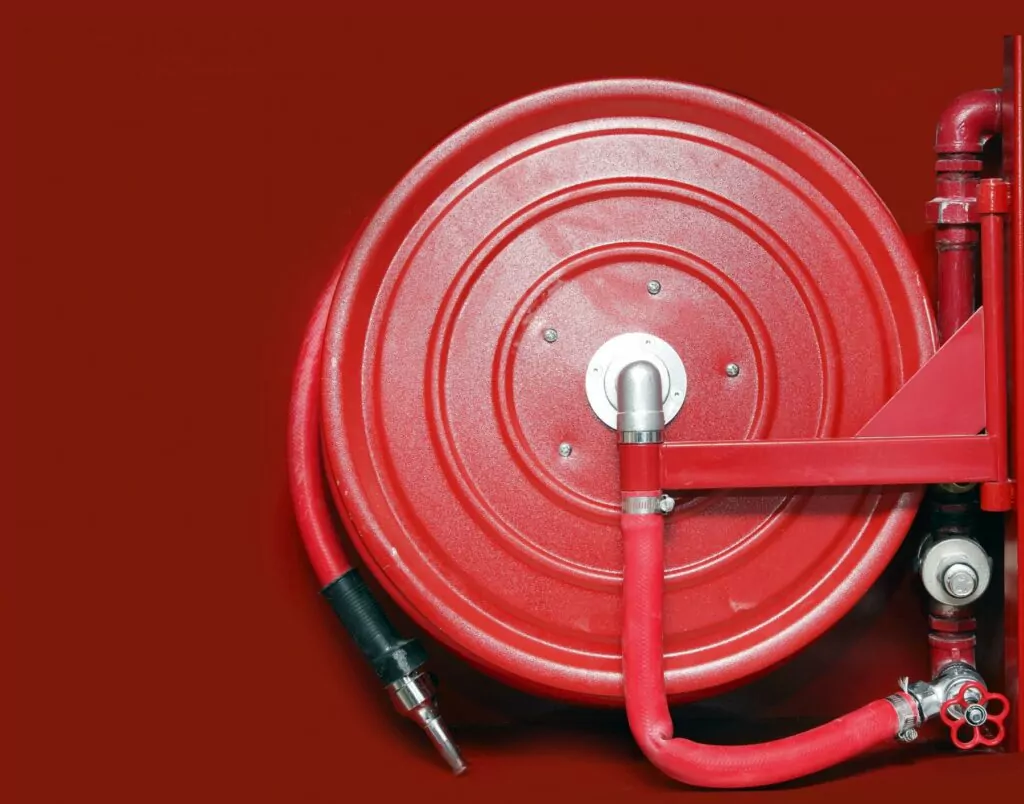
















In the world of fire safety, protection systems are fundamental to preserving lives and property. Among these systems, the hose reel is a key component that, when properly designed, installed, and maintained, can make all the difference in an emergency situation. In this article, we will explore how proper planning, correct installation, and regular maintenance of hose reels ensure the efficiency of this system and the safety of buildings.
Proper Planning: The Foundation of an Efficient System
First and foremost, it is crucial to understand that planning is the initial and essential step in the hose reel implementation process. At this stage, factors such as the building layout, pedestrian flow, and accessibility must be considered. For example, when planning the installation of hose reels in a commercial building, it is necessary to ensure that they are strategically distributed, covering all risk areas and allowing easy access in case of emergency.
Furthermore, local technical standards and regulations must be considered. Thus, proper planning not only meets legal requirements but also maximizes the system's efficiency.
Correct Installation: Guarantee of Optimal Functioning
Once the planning is complete, the next step is the installation of the hose reels. This is a process that requires precision and technical knowledge. One of the most important aspects of the installation is securing the units in easily accessible and visible locations, ensuring they can be used quickly when needed.
Another crucial aspect is choosing the right materials. For example, hoses and nozzles need to be heat and pressure resistant, as well as compatible with the type of fire extinguisher they are connected to. By opting for quality materials and following best installation practices, the risks of operational failures, which could compromise safety at a critical moment, are minimized.
Regular Maintenance: The Key to Reliability
Last but not least is the regular maintenance of the hose reels. Like any other safety equipment, hose reels should be inspected periodically to ensure they are in perfect working order.
Maintenance includes checking the integrity of hoses, extinguisher pressure, and nozzle functionality. Furthermore, it is essential that maintenance records are kept up-to-date and that the responsible teams are trained to identify and correct any problems that may arise. This not only extends the lifespan of the equipment but also ensures that it will be ready for use when needed.
Conclusion: A Complete System for Fire Safety
In short, the success of a hose reel system depends on meticulous planning, careful installation, and rigorous maintenance. Each of these steps plays a vital role in ensuring that the hose reels will function efficiently in emergency situations. Therefore, investing in quality at every stage of this process is undoubtedly a smart and necessary measure to protect lives and property.