

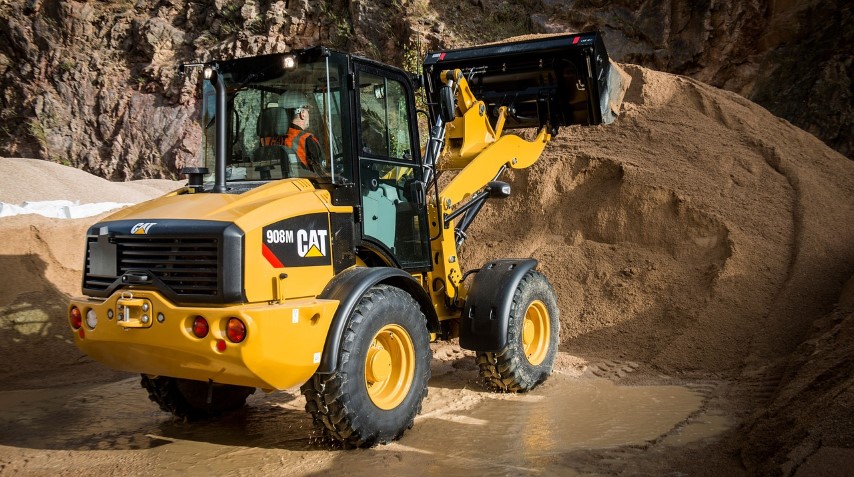
















The earthmoving process is more than necessary for works and constructions to move forward. However, it is essential that the entire process is monitored by professionals to prevent any accidents from occurring during execution.
In this article, you'll find all the important information about earthmoving and the processes involved.
What is land leveling?
Earthmoving is simply a process involving the movement or processing of large portions of the surface of a soil. Most of the time, the procedure doesn't necessarily involve only soil, and may include rocks and other debris found along the way.
The main objective of earthmoving is to level a specific plot of land so that various constructions can be carried out on the site, whether it be canals, dams, roads, or even to prepare the land for building buildings or factories.
Why is a foundation necessary?
The foundation is an indispensable element when it comes to construction, since it is through it that a house or any other building can be supported on the land, making it safer and more efficient, without causing harm to the workers and those who will inhabit the location.
It is through the elements present in the foundation that the weight of the building and all the climatic conditions that will pass through that specific area are received, guaranteeing total safety in relation to the soil.
Main applications of earthworks
Earthmoving can be applied to a wide variety of projects, such as:
- Road works;
- Residential projects;
- Land with an incline or decline;
- Public or commercial works.
It is also important to say that the use of this method will depend specifically on a prior analysis and study of the terrain as a whole. The entire procedure is theoretical and will depend directly on the observations made by the professionals at [company name/organization]. engineering area and topography.
Most common methods used in earthmoving
There are several methods that need to be considered in the land leveling process. Check out the list below to see what they are and how each one works within this framework.
Grounding process
The landfill process consists of pouring soil into a specific location so that areas below the elevation of a pre-existing project can be raised. In most cases, red soil is used in this process.
Excavation
The excavation period refers to the time during which the machine lowers the entire natural topography of a terrain.
Stump removal
It consists of removing any plants or vegetation that may hinder the construction of the project on that land.
Compaction
Compaction occurs when there is a need to create embankments in certain parts of the terrain, requiring the soil to be compacted using compaction equipment.
Demolition
Demolition is the process of removing any obstacle from the land, whether it be houses, buildings, structures, or warehouses.
Waste removal
Waste removal is carried out after demolition, removing all landfill and any other material generated during the site cleanup process.
Soil exchange
Soil replacement occurs when the original consistency of the soil is not suitable for the project or is not firm enough. For this, a soil study is required.
Soil drainage
Drainage is carried out when the ground is very wet and the amount of water in the area needs to be removed urgently. For this purpose, channels are created for runoff.
Earthmoving or land leveling? Do you know the difference?
Both terms, terraplenagem and terraplanagem, can be used interchangeably. However, there is an extremely important point that must be taken into consideration. Terraplenagem originates from the verb "terraplenar," which is directly related to "filling in" and "transforming into something complete.".
The term "terraplanagem" is directly related to the variation of the verb "aplainar," which means "to flatten." The dictionary states that the correct term would be "terraplenagem," while the second term is seen as an informal expression, but one that also serves to designate a specific activity of leveling the land for future construction.
Importance of having an engineer involved
It is necessary for an engineer to oversee the entire process to ensure there are no errors. structural may be caused during construction. He will be responsible for overseeing all actions that will take place in that environment, ensuring the safety of both the workers and the people who will frequent the site after the completion of the work.
The land leveling process is extremely important for a construction project because it provides a foundation for the building. With a flat and level terrain, any obstacle can be overcome during the project's execution.