

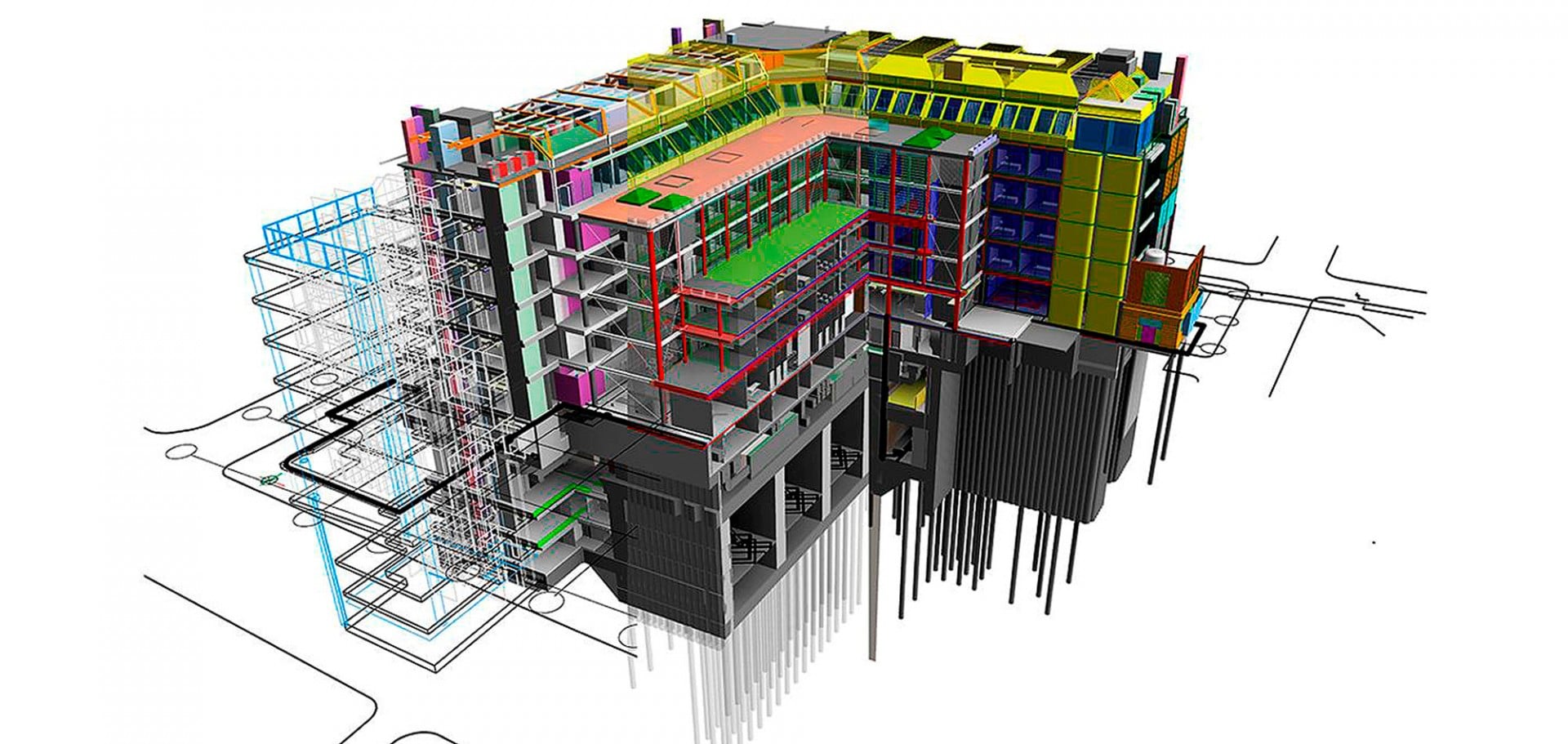
















Building Information Modeling (BIM) represents a revolution for the construction industry, offering a digital approach to planning, designing, constructing, and operating buildings and infrastructure. This article explores the concept of BIM, its evolution, and the impact it has had on engineering.
1. What is BIM and how does it work?
- Explanation of the BIM concept as a 3D digital model that integrates design, construction, and maintenance data.
- The evolution from CAD (Computer-Aided Design) to BIM, offering a more integrated and collaborative vision.
- BIM components, such as 3D, 4D (time), and 5D (cost) planning, among other dimensions that can be added.
2. Advantages of BIM in Engineering
- Reducing Errors and ReworkHow BIM allows you to detect incompatibilities between different systems (electrical, hydraulic, structural).
- Efficiency in PlanningClear and precise visualization of project stages, allowing for optimizations and adjustments before execution.
- Collaboration between TeamsHow BIM facilitates communication and information sharing between architects, engineers, and other professionals.
3. Practical Applications of BIM
- Project SimulationsAssessment of environmental conditions, lighting, ventilation, and material impact.
- Resource and Cost ManagementUsing BIM for financial estimates and management of materials and labor.
- Sustainable ConstructionUsing BIM to reduce waste and increase material efficiency.
4. Challenges and Limitations of BIM
- Learning Curve: Need for specialized training and high initial investments.
- Compatibility and InteroperabilityProblems that may arise with different software, such as Revit, ArchiCAD, Navisworks, among others.
- Change ManagementResistance from professionals and companies to the transition to a new work methodology.
Conclusion
Summary of key points and a discussion on the future of BIM in engineering, such as the use of 6D BIM (sustainability) and 7D BIM (maintenance and operation).