

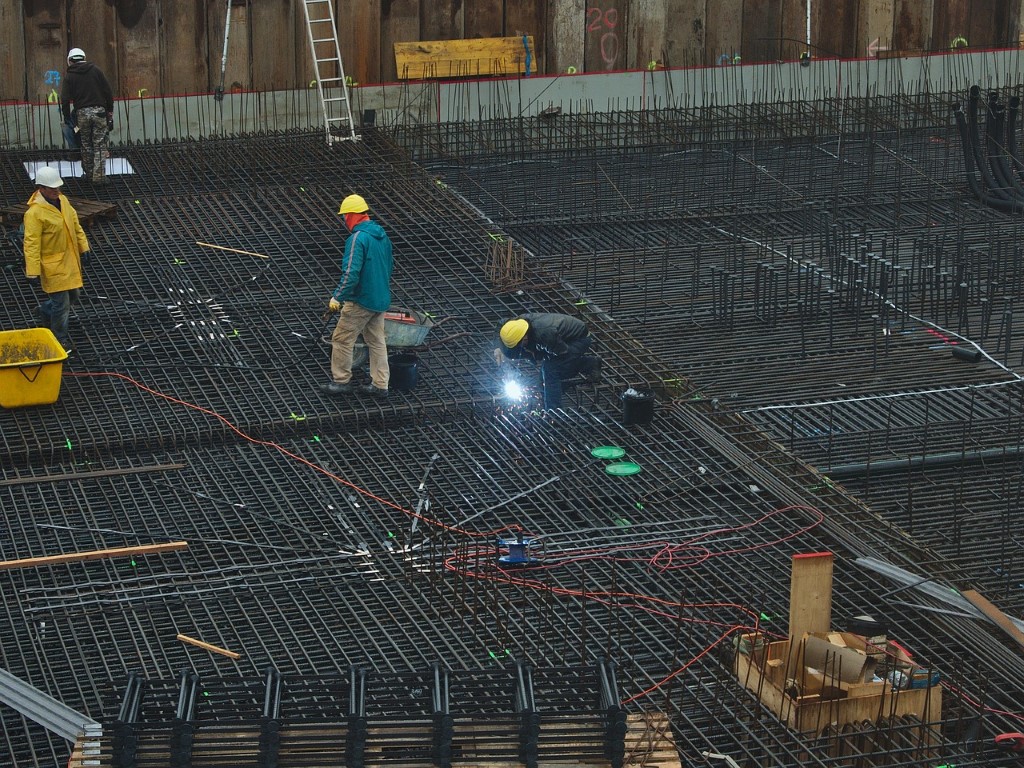
















The foundation, in itself, represents an extremely important part of construction. Without it, it is impossible for a building to stand with sufficient strength to be considered safe. With this in mind, there are various types of foundations.
Each type is suited to a specific project, allowing the area to be built without major problems and providing safety for residents and those responsible for the construction. In this article, find more information on this subject to better understand the relevance of this structure.
What is a foundation?
In general, the foundation is seen as a structure responsible for distributing loads to the ground in the most common areas. varied projects, Whether they are houses, buildings, viaducts, or any other type of construction. Therefore, the foundation is the first step before putting the work into practice.
Why is a foundation necessary?
The types of foundations are strictly necessary to ensure that a building performs as expected. This structure is responsible for supporting parts of the building, such as live loads and weather conditions like wind, soil, and rocks.
It is necessary that the foundation be properly specified to ensure that it is efficient for its intended purpose. It must support the entire structure, fulfilling the main objective of guaranteeing the stability of the ground, the safety of the building, and also the complete structuring of the proposed project.
Most common foundation types
Check out the topics below to see the most common types of foundations.
Isolated footing
Isolated footings are recommended for use on more resistant terrain and firm soil. Their base can have a variety of shapes, whether rectangular, square, circular, or polygonal. Therefore, it is considered one of the strongest on this list for supporting large-scale constructions.
Foundation
The foundation beam is a connection between the footing beams, allowing them to be below ground and run along the wall of a building. This same beam is associated with a series of columns.
Running shoes
Continuous footings are those where the foundation is very direct and shallow, commonly used to build reservoir walls, retaining walls, and also houses with very small spans. Their structure is continuous, being produced from reinforced concrete in the lower part of the walls.
Raft foundation
A raft foundation is one type of foundation that supports large dimensions, where a building must receive at least 70% of the total load of the building. Generally, it is seen as a huge reinforced concrete slab, which can also be prestressed, located at the bottom of the construction, in direct contact with the ground.
Associated shoes
Combined footings are responsible for supporting high structural loads while maintaining a perfect balance between the beams and the slab.
Foundation block
The main reason for implementing a foundation block is its ability to absorb the load and allow its distribution without the need for reinforcement. Its design is based on a strategy that allows tensile stresses to be absorbed by the concrete.
Deep or indirect foundation
Deep or indirect foundations are those that have the capacity to transmit the entire load through the base or lateral surface. In most cases, they are used in structures with shallow soils, where there is little capacity to support the weight.
Caissons
Caissons, in turn, are cylindrical elements, lined with steel or concrete, that can be used in two specific types of construction: those in the open air or under compressed air.
How to choose the right foundation?
Among the different types of foundations, the correct way to choose one is through technical criteria, which disregard economic factors. engineer You should also assess what type of construction will be required, the characteristics of the terrain, and whether there is sufficient resistance at the site.
Importance of qualified professionals
When choosing to do any type of project, It is important to have qualified and competent professionals involved. In this way, the integrity of the building and the safety of the construction will be guaranteed for both sides.
Although there are various types of foundations, it is important to have professional guidance to determine the correct one and ensure the smooth progress of the construction.