

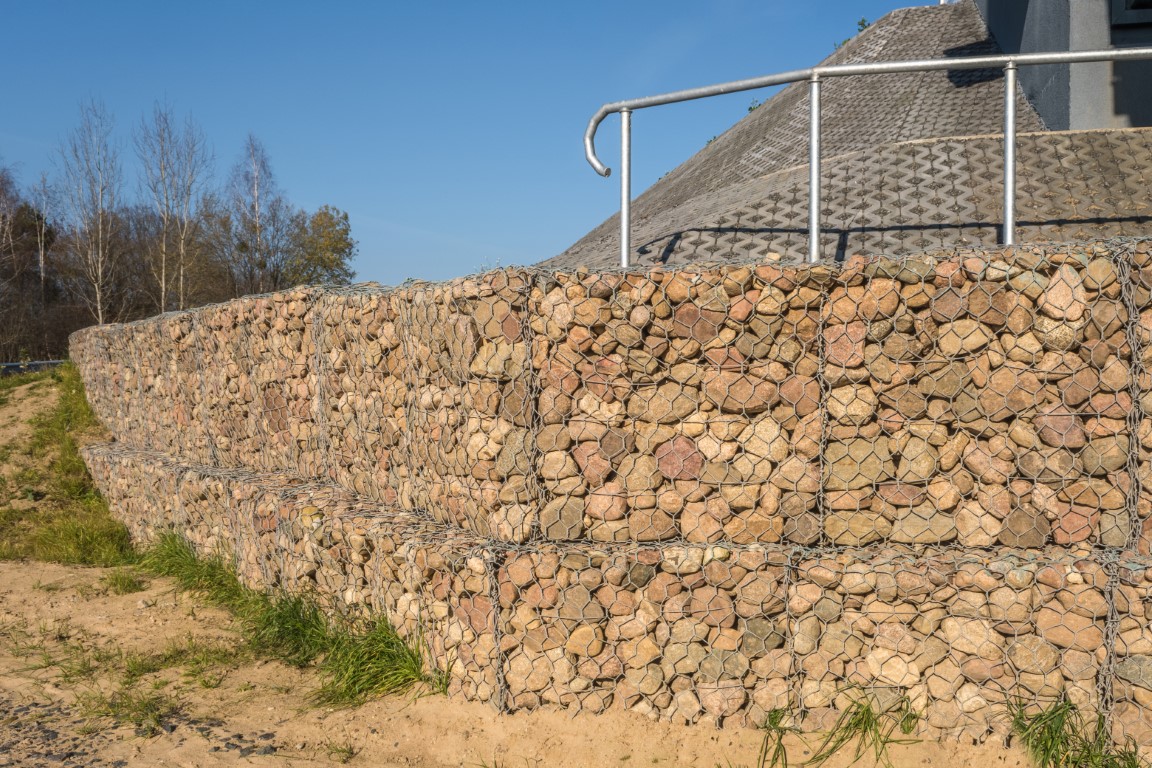
















A retaining wall is responsible for bringing greater quality to the construction, as well as implementing safety and stability for the land as a whole. Therefore, it proves to be an excellent option for those who want peace of mind.
This technique is quite widespread in the construction industry, especially because it is an effective form of containment. However, it is necessary that it be applied by a specialized professional to ensure the project's full efficiency. To understand it better, read this article to the end.
What is a retaining wall?
A retaining wall, also known as a gravity wall or weight wall, is simply a structure with a strong frame capable of withstanding various types of forces, whether from embankments or specific dams. Furthermore, it is also responsible for balancing the pressure within a terrain, preventing greater damage.
What is the purpose of a retaining wall?
One of the most important functions of a retaining wall is precisely to ensure safety, as its purpose is to hold back the earth where it is highest, consequently preventing problems related to landslides.
Earth thrust
To build this type of wall, it will be necessary to take into account the earth pressure, which is nothing more than the force resulting from the actions of the earth on the wall to be erected. Therefore:
- Active thrust: corresponds to the action of the earth on the wall;
- Passive thrust: corresponds to the wall's reaction to the action of the ground.
How is a retaining wall built? Project phases
There are many ways to build a retaining wall, especially since it can be constructed from a variety of materials. They are generally built with concrete, ceramic, or a metal frame. It is essential that the professional knows how to assess the site and perform the necessary calculations before erecting it.
Furthermore, its construction involves two phases: the dimensioning of the wall and the verification of the stability of the forces acting in the region.
Precautions during execution
During the construction of a retaining wall, it is necessary that a civil engineer or a qualified professional must be present. Due to poor design or inadequate execution, there is a high chance of a rupture and, consequently, serious consequences for the environment.
The main precautions that should be taken, according to NBR 11682, are:
- Implement the drainage system in the proper manner;
- Avoid excavation in natural terrain that could cause instability;
- Perform the backfilling using appropriate materials;
- Do not construct gravity retaining walls in the upper areas of a slope or hillside.
Water care
During rainfall, the water saturates the soil, causing it to gain more weight. Therefore, when installing a retaining wall, it is ideal that the structure be meticulously calculated to accommodate all the additional load from rainfall or leaks, adding a safety margin.
Adding a layer of gravel between the soil and the drains is also a good idea, as is waterproofing the back of the wall.
Types of retaining walls
Below, you can learn about some types of retaining walls.
Concrete block
A wall made of concrete blocks is one of the cheapest ways to build, where the structure is first constructed and then finished with cladding.
Stones
Stone retaining walls are excellent options, especially for walls up to 3 meters high where a drainage system is needed to channel rainwater away.
Gabion
This model is easier to implement because there is no need to include a drainage system. They are made from steel wire cages filled with stones.
Reinforced concrete walls
The walls made from reinforced concrete They have L-shaped profiles for heights up to 2 meters, in classic or special shapes for heights between 2 and 4 meters, and can also be braced.
A retaining wall can be used as a safety measure, provided that all necessary precautions are taken during its construction.