
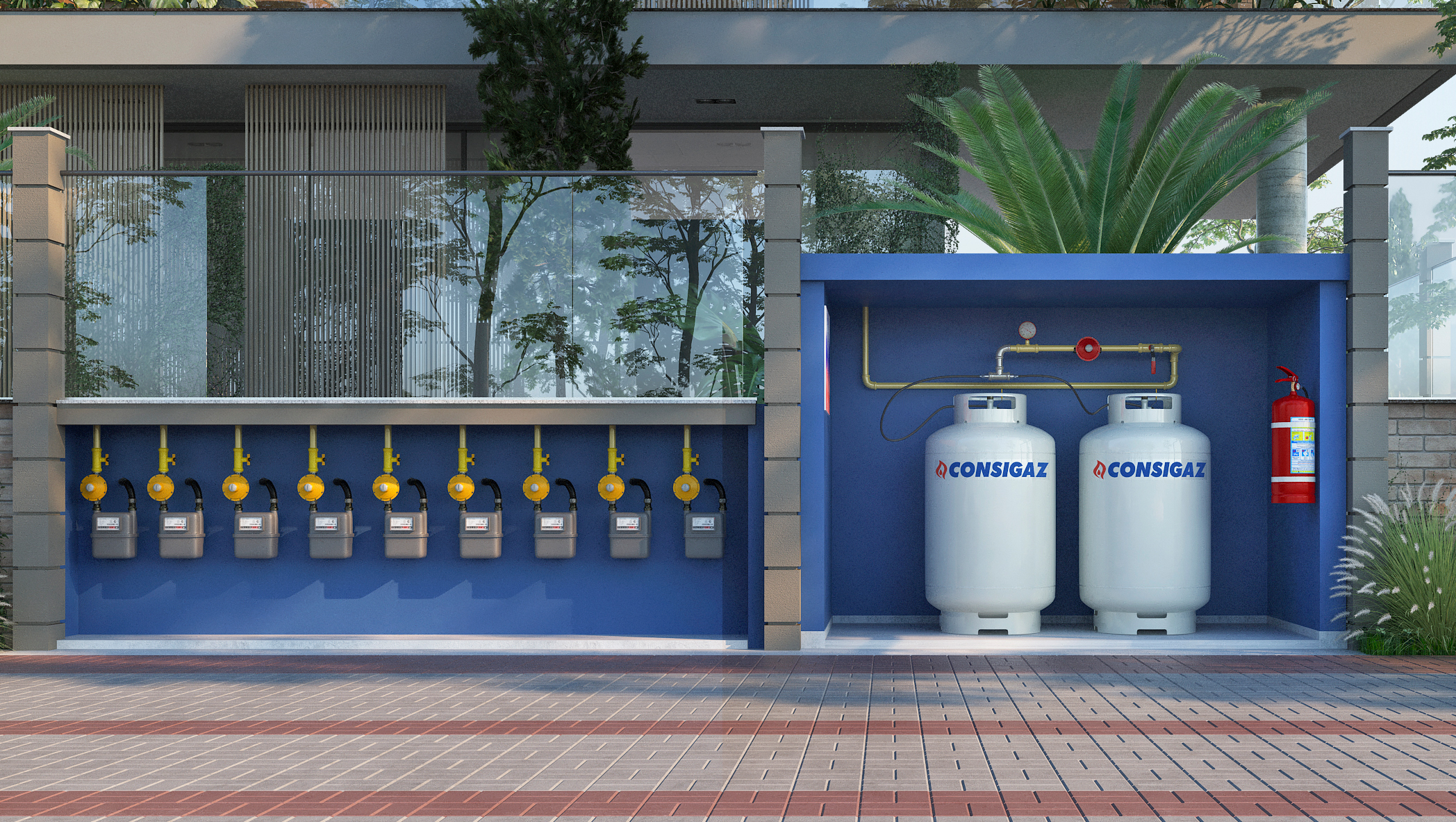
















The use of LPG in condominiums is common and efficient. However, It requires security, maintenance, and compliance. Furthermore, Technical standards determine how everything should operate. That's why, This guide explains the essentials about the system. Consequently, Building managers and residents understand exactly how to proceed. Like this, The condominium operates with complete security.
What is LPG and why is it used in condominiums?
LPG is a stable and high-performance fuel. Like this, It is ideal for stoves, heaters, and hot water. Furthermore, Its efficiency reduces day-to-day costs. That's why, Condominiums prefer this type of gas. Consequently, It became a widely adopted solution.
Condominiums choose LPG because:
- It offers excellent value for money.
- Allows for secure storage.
- Maintains a constant supply.
That way, It meets the needs of residential developments.
How does the LPG central system work in a condominium?
The central unit houses cylinders or tanks. From this, The gas travels through the pipes to the units. In this way, The distribution occurs continuously. Furthermore, Regulators and valves control the pressure. That's why, Any flaw needs to be corrected quickly.
The central unit includes:
- Cylinders or tank
- Regulators
- Ventilated shelters
- Piping
- Valves
- Exhaust and ventilation
Like this, The structure must comply with the standards of NBR 15514. Consequently, The system remains secure.
Responsibilities of the building manager
The building manager is the technical and administrative expert. That's why, He must control the entire system. Furthermore, It needs to ensure maintenance and inspection. That way, avoid risks and penalties. Consequently, The condominium remains in good standing.
Main responsibilities:
- Keep inspections up to date.
- Issuing expert reports and ARTs (Technical Responsibility Certificates)
- Comply with Fire Department regulations.
- Avoid improvisation.
- Document the entire procedure.
Like this, The building manager contributes directly to collective safety.
Responsibility of residents
Residents also influence security. In the end, Small actions prevent big problems. Furthermore, Proper use reduces internal risks. That's why, It is important to follow recommendations. Consequently, Everyone benefits.
They must:
- Avoid internal changes
- Use certified equipment.
- Test for leaks with soap and water.
- Report any smell of gas immediately.
- Maintain adequate ventilation.
Like this, The system works flawlessly. Furthermore, Security increases significantly.
Main risks when there is no maintenance
Lack of maintenance creates real risks. Among them, There are leaks, fires, and explosions. Furthermore, Gas poisoning can occur. As a result, serious accidents become more likely. That's why, Preventive maintenance is essential. Consequently, The system remains protected.
Mandatory maintenance and frequency
Maintenance should follow a technical schedule. Furthermore, Everything needs to be properly documented. That's why, The condominium should conduct frequent inspections. Consequently, The supply remains secure.
Essential steps:
- Annual inspection
- Leak test
- Technical report with ART (Technical Responsibility Certificate).
- Valve inspection
- Ventilation check
- Shelter organization
Like this, The system operates reliably. Furthermore, avoids unexpected interruptions.
Warning signs that require immediate action.
There are signs that indicate risk. Among them, they are:
- Smell of gas
- Yellowish flames
- Vibration of regulators
- Unusual noises
- Damaged cylinders
If this happens, The building manager must act quickly. Like this, The problem is solved before it gets worse. Furthermore, Immediate intervention reduces greater risks.
Regulations governing the use of LPG in condominiums.
Technical standards are mandatory. Furthermore, They provide guidance on installation, maintenance, and operation. That's why, The condominium must comply with all of these rules.
Main standards:
- NBR 15514
- NBR 15358
- NBR 13523
- NBR 8419
- Fire Department Rules
Consequently, The system remains within the required standards. Like this, avoids fines and irregularities.
Advantages of LPG when everything is correct.
When the system is compliant:
- The supply becomes stable.
- Security is increased.
- The operation becomes reliable.
- Costs decrease
- The equipment lasts longer.
I.e, LPG delivers excellent performance. Furthermore, It offers comfort and savings for everyone.
Conclusion
LPG is safe and efficient., provided that be managed correctly. That's why, Condominium managers should prioritize maintenance and inspection reports. Furthermore, Residents need to follow good practices. In this way, The condominium operates safely. Consequently, Everyone benefits from a reliable system. Like this, LPG remains one of the best options for condominiums.