

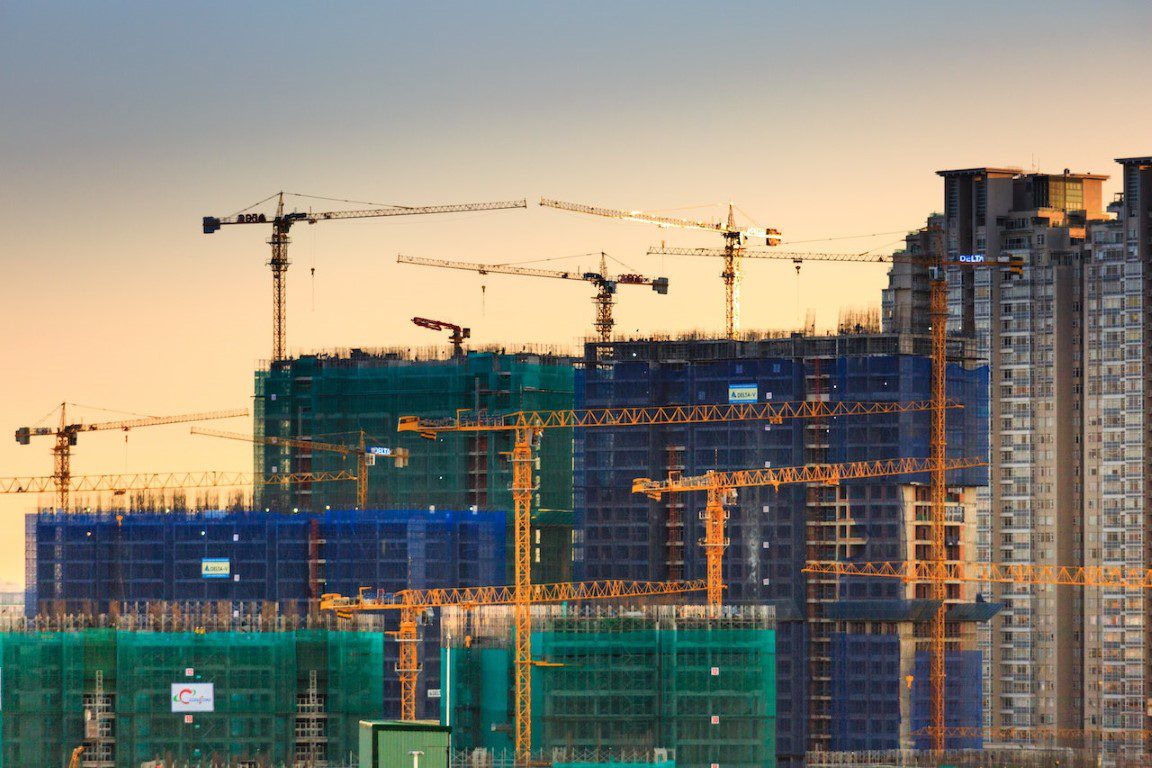
















Engineering is a constantly evolving field. The search for more efficient and sustainable solutions is one of the greatest challenges faced by professionals in the area. In this context, innovations in construction materials are extremely important for the future of engineering.
What are innovations in building materials?
Innovations in building materials are new products, processes, and technologies that make construction more efficient, economical, and sustainable. These innovations arise from research in laboratories and educational institutions, as well as practical testing on construction sites.
What are the main innovations in building materials?
There are several innovations in building materials that are transforming engineering. Below, we highlight some of the main ones:
High-strength concrete
High-strength concrete is a mixture of cement, aggregates, and additives that gives the material superior strength compared to ordinary concrete. This type of concrete is capable of supporting greater loads, allowing for the construction of more slender structures with lower material consumption.
Glued laminated timber (GLT)
Glued laminated timber (GLT) is a technique that involves joining several layers of wood with special adhesives, forming beams and pillars of great strength. In addition to being a renewable and sustainable material, GLT can replace concrete and steel in some applications.
Smart glass
Smart glass is a coating that has the ability to change its optical properties according to external conditions. This type of glass can control the amount of light and heat entering a space, which reduces energy consumption in air conditioning and lighting systems.
Thermal insulation materials
Thermal insulation materials are used to reduce heat transfer between the interior and exterior of a building. These materials can be made from various substances, such as rock wool, expanded polystyrene, and cellulose foam.
Other innovative materials you need to know about:
Hydroceramic
Hydroceramic is a new composite material that promises to improve the thermal insulation of buildings. Developed at the Institute for Advanced Architecture of Catalonia, in Spain, it is composed of three basic components that form ideal panels for facade cladding.
The main component is hydrogel, a polymer that expands up to 400 times when it comes into contact with water. In dry environments, the evaporation of water promotes a reduction in the surrounding temperature.
In hydroceramics, numerous hydrogel bubbles are enclosed within ceramic tiles – one internal, one external – protected by a special fabric. This creates a coating material that reduces the internal temperature by up to 6°C compared to the external temperature. This property makes hydroceramics an attractive option for hot areas, where reducing the internal temperature is essential for thermal comfort.
Bioreceptive concrete
Bioreceptive concrete is an innovative material that allows the growth of biological content (biofilms) within it without affecting its structure. This type of concrete can be used on building facades, creating green coatings that do not depend on additional technical systems.
Delft University of Technology in the Netherlands recently developed a highly absorbent concrete that retains moisture, making it receptive to moss growth. The idea is to apply this concrete as a layer on existing concrete surfaces, transforming them into "living surfaces" covered in moss over time. This technique is a way to bring more life to urban architecture and increase the biodiversity of cities.
Graphene
Graphene is a form of carbon with a hexagonal lattice structure of atoms. It is considered one of the strongest and most durable materials ever discovered, as well as being highly conductive of heat and electricity.
In civil construction, graphene can be added to materials such as concrete, mortar, and paints to improve their physical and mechanical properties. For example, adding graphene to concrete can improve its tensile and flexural strength, as well as increase its fire resistance. Graphene can also be used as a coating material, as a thermal and acoustic insulating layer.
Another potential application of graphene in construction is as a building material for lightweight and strong structures, such as bridges and buildings. Graphene is much stronger than other materials like steel and aluminum, meaning it can be used in thinner and lighter structures. Furthermore, graphene is corrosion-resistant, meaning it can be used in outdoor applications without deteriorating over time. With all these properties, graphene is a promising material for the future of civil construction.
Aluminum foam
Aluminum foams are widely used in various industries, including aerospace, automotive, electronics, thermal and acoustic insulation, among others. In automobile manufacturing, for example, it allows for weight reduction and more efficient fuel consumption.
In civil construction, aluminum foam is very suitable as a facade cladding for buildings because it is resistant to corrosion and weather, is non-hygroscopic, and has non-combustible performance. Aluminum foam also has excellent thermal insulation, noise reduction, and electromagnetic shielding properties. These characteristics make aluminum foam an innovative and promising material for civil construction, bringing benefits such as energy efficiency and acoustic comfort.
Solar tiles
Solar roof tiles are a promising energy solution for the future of the construction industry, as the generation of clean and renewable energy is a priority. They have panels capable of collecting energy from the sun and directing it to power the building's activities.
Due to its advantages, the Brazilian government offers incentives for those who use this type of material in their constructions. Solar roof tiles are a sustainable and economical option for electricity production, contributing to environmental preservation and reduced electricity costs. Furthermore, the installation of these tiles is relatively simple and can be adapted to different types of roofs.
What is the impact of innovations in building materials on engineering?
Innovations in building materials have a direct impact on engineering, as they enable the construction of more efficient and sustainable buildings. Furthermore, these innovations allow for cost reductions in construction, since more efficient materials can be used instead of more expensive and heavy ones.
How can innovations in building materials be applied in practice?
Innovations in building materials can be applied in various areas of engineering, from the construction of residential buildings to transportation infrastructure.
What are the challenges of innovations in building materials?
Despite bringing numerous benefits to engineering, innovations in construction materials also present challenges to be overcome. One of the main challenges is the lack of knowledge among professionals in the field about these new materials. It is necessary to invest in training and development so that engineers can apply these technologies efficiently.
Another challenge is the availability of these materials on the market. Often, innovations in construction materials are more expensive and harder to find than conventional materials. Companies need to invest in large-scale production of these materials to make them more accessible.
Innovative materials: are they worth using in Brazil?
The adoption of innovative building materials can generate resistance to change, especially when they come from outside the country. This can result in higher prices, difficulty in finding skilled labor, and questions about the material's performance.
However, it is important to be aware of the market's acceptance of new technologies in order to keep your company constantly updated and ahead of the competition. Innovative building materials are the beginning of a revolution that will be increasingly difficult to ignore in the coming years.
Adopting these materials can bring benefits such as greater energy efficiency, increased durability, and reduced environmental impact. Furthermore, investing in innovative building materials can be a competitive advantage for companies, delivering incredible results in consistency and scale.
Therefore, it is worthwhile to consider the use of innovative building materials in Brazil. With proper research and planning, it is possible to find innovative solutions that suit your company's needs and bring benefits to the environment and society as a whole.