

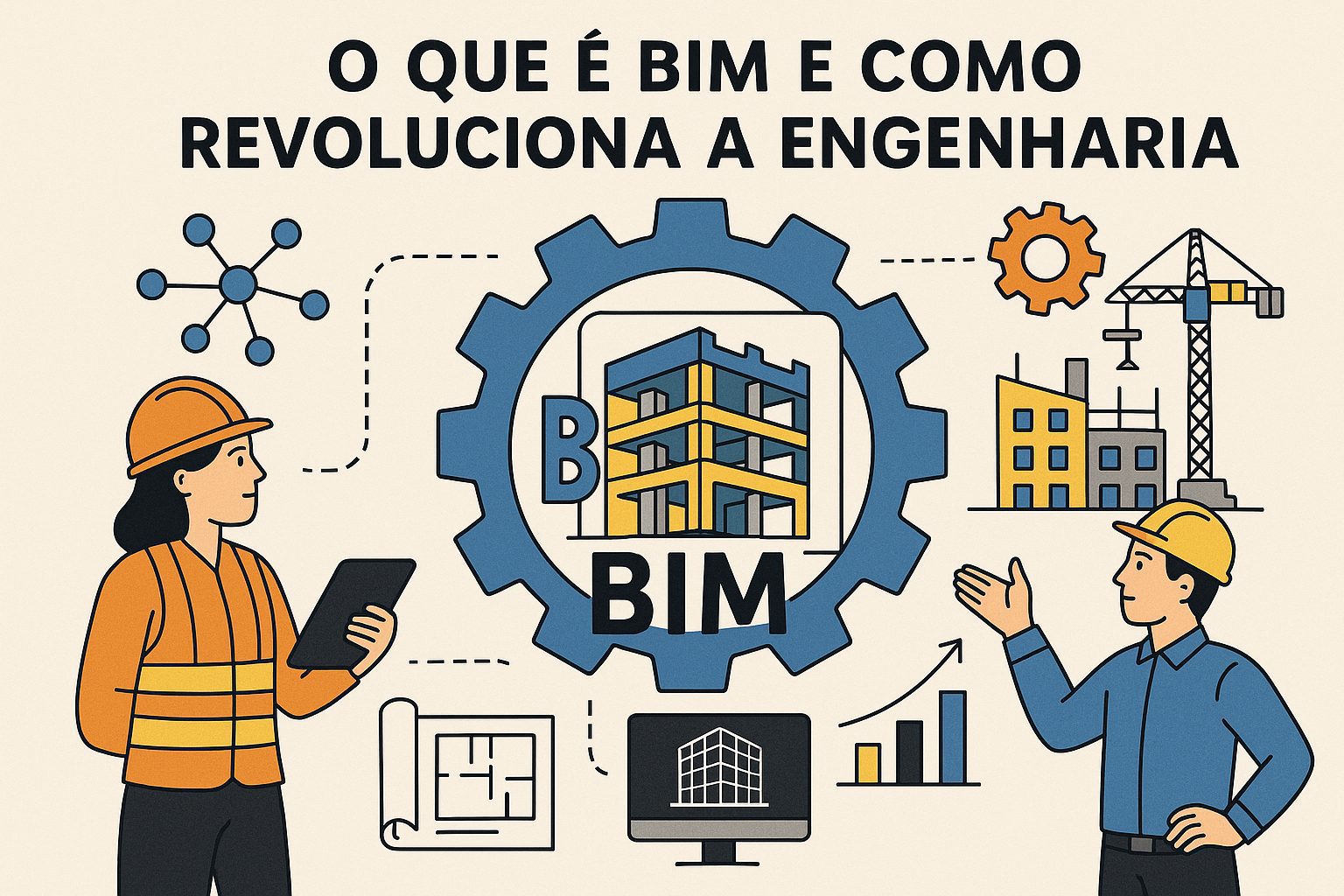




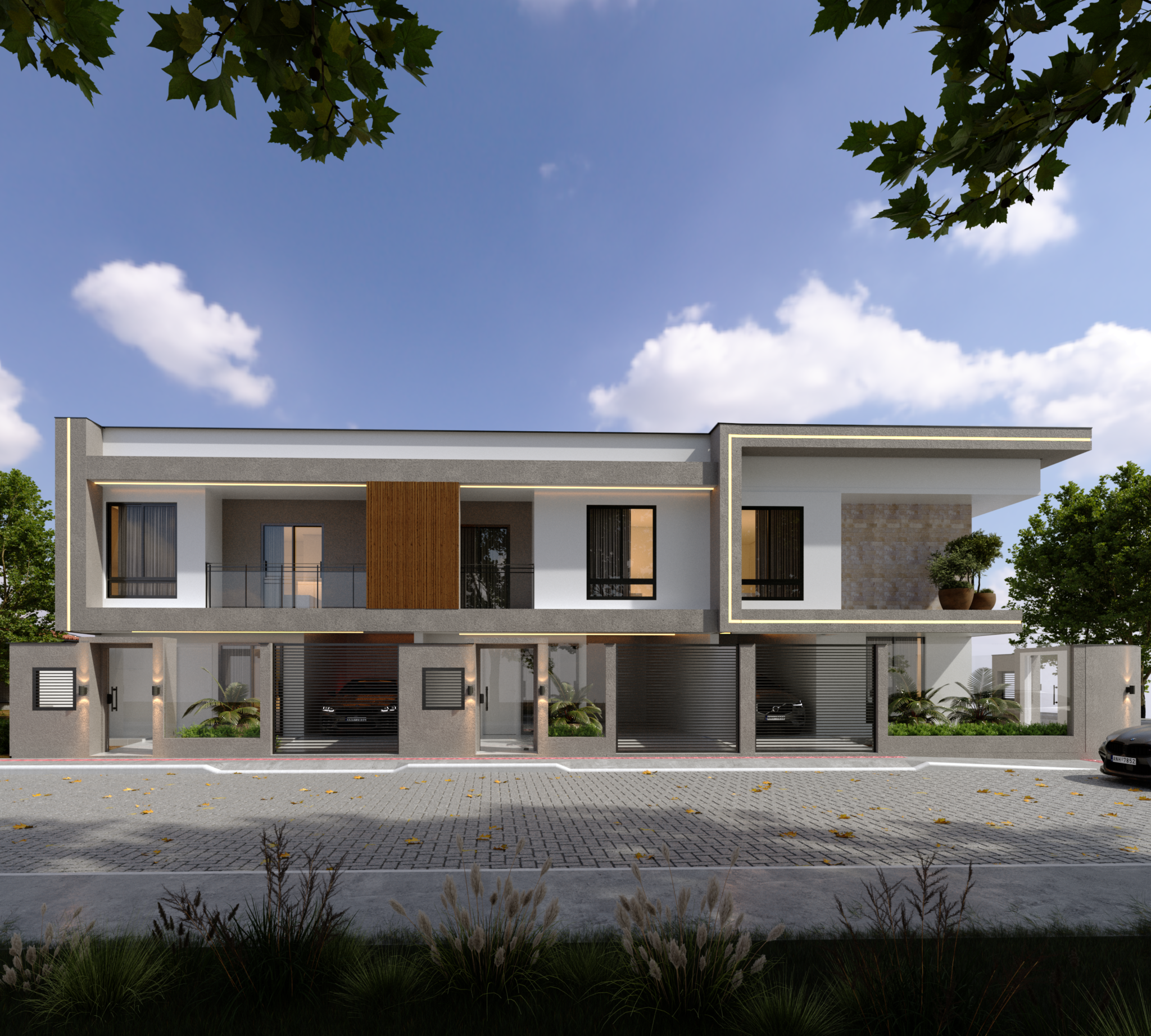











The construction industry is undergoing a profound transformation. In fact, this transformation is driven by a technology that goes far beyond simple 3D modeling: BIM (Building Information Modeling). Therefore, understanding BIM is no longer just a trend – it is fundamentally a necessity for professionals who wish to remain competitive in the market.
In this article, we will explore what BIM is, its revolutionary benefits, and how this methodology is completely transforming the way engineers, architects, and builders work together.
What is BIM (Building Information Modeling)?
Before we delve into technical details, it's essential to define what BIM actually means. In simple terms, BIM is a collaborative process based on intelligent three-dimensional models. which allows you to create, manage, and share information about a construction project.
Unlike traditional 2D drawing, BIM is not just a drawing. In fact, it is a... complete digital database of the entire construction, containing geometric information, materials, schedules, costs, and much more. Therefore, each object in the BIM model carries with it properties and data that can be accessed and used by different professionals.
BIM functions as a “"digital encyclopedia"” of the project. Specifically, it allows access to detailed and accurate information to facilitate the operation, maintenance, and even demolition of each element throughout the building's life cycle.
The Three Fundamental Pillars of BIM
To fully understand how BIM works, it's important to know its three main pillars. Therefore, let's detail them:
1. Multi-informational Modeling
Multi-informational modeling refers to the inclusion of all possible types and formats of information to make the project as complete as possible. Furthermore, this means that each element of the model contains not only geometric data, but also material specifications, schedules, costs, and much more.
2. Interoperability
Interoperability is what allows... software from different manufacturers can communicate with each other. Using a common language, engineers working with Revit can share information with professionals using ArchiCAD through the IFC (Industry Foundation Classes) format.
3. Integrated Production Chain
Each element in the production chain impacts the next element. Therefore, when an architect makes a modification to the model, this change is automatically reflected in all related projects – structural, electrical, plumbing, and others.
How does BIM work in practice?
Understanding how BIM works in practice is fundamental. Therefore, let's examine how it operates from conception to maintenance.
Virtual Creation of the Artwork
The first step is to create a digital three-dimensional model of the artwork. This is not a simple 3D visualization – it's an intelligent model where each element contains specific information. In fact, when a column is placed in the model, it already comes with information about its diameter, concrete strength, amount of reinforcement, and much more.
Real-Time Collaboration
Therefore, one of the greatest advantages of BIM is... ability of multiple professionals to work on the same project simultaneously.. Specifically, architects, structural engineers, electrical engineers, and hydraulic engineers collaborate on a shared model. Furthermore, any changes made by one professional are immediately visible to the others.
Automatic Conflict Detection
One revolutionary aspect of BIM is its ability to identify interferences before construction. For example, it can detect that a hydraulic pipe is interfering with a structural beam. Consequently, these problems are virtually resolved, saving time and money on the construction site.
Centralized Data Storage
Therefore, all project information – technical drawings, schedules, budgets, documentation – is centralized in a single location. This eliminates the risk of conflicting versions or lost data.
The Dimensions of BIM: Beyond 3D
An important concept about BIM is understanding its multiple dimensions. Therefore, BIM is not just 3D. In fact:
3D – Geometric ModelingThe base provides a detailed digital model of the artwork.
4D – Time ManagementIt integrates project time management, allowing for effective work planning. Specifically, it allows visualization of the construction sequence over time.
5D – Economic ManagementIt adds economic management, allowing for cost control and investment forecasting. Therefore, it reduces budget errors and identifies opportunities for savings.
6D – Energy SustainabilityIt is linked to energy sustainability, allowing for energy efficiency analyses of the building.
7D – Management and MaintenanceThis relates to facility management, which involves storing all the information necessary for the operation and maintenance of the building throughout its lifespan.
The Greatest Benefits of BIM in Engineering
Adopting BIM brings extraordinary benefits to engineering. Therefore, let's explore the main ones:
Significant Cost Reduction
Perhaps the most impactful benefit is the reduction in costs. In fact, Studies show that BIM reduces total construction costs by an average of 9.7%.. Furthermore, input costs can be reduced by up to 20% due to the ability to rationalize material use.
How does this happen? Specifically, BIM allows:
- Identify the exact cost and quantity of materials.
- To facilitate the accurate calculation of the necessary workforce.
- Avoid waste through more effective planning.
- Reduce rework by identifying problems before construction.
Simplified Planning and Time Reduction
BIM allows you to plan with much greater precision. Therefore, it lays the foundation for a smoother project execution. By providing a detailed digital model, it allows for in-depth analysis even before the ground is drilled.
In fact, the methodology allows:
- Anticipating potential problems
- Simulation of different construction scenarios
- Better alignment with planned schedules.
- Significant reduction in delays and rework.
Quality and Safety Improvement
BIM significantly increases the quality and safety of construction projects. Specifically:
- It provides a comprehensive and detailed digital representation of the project.
- It allows for thorough planning and analysis of all aspects.
- Ensures that all elements of the process are optimized.
- It helps to identify and correct potential problems early in the design phase.
Consequently, the construction standard is far superior and the final structure is safer.
Better Communication Between Teams
Communication is one of the biggest challenges in the construction industry. Therefore, BIM revolutionizes this by creating a... centralized collaboration space. Furthermore, instead of working in a compartmentalized way with conflicting email exchanges and versions, everyone works from a single model, updated in real time.
That way:
- Architects immediately visualize the impact of their solutions on the structure.
- Electrical and hydraulic engineers detect interferences before execution.
- Coordinators obtain reliable data for time and cost estimates.
- The entire team understands the project clearly.
Project Compatibility
One of the biggest traditional problems is the lack of compatibility between disciplines. In fact, it's common to find conflicts between structural and electrical systems, or plumbing and structural systems. Therefore, BIM solves this automatically.
Specifically:
- The model automatically detects geometric interferences.
- It facilitates the effective integration of different disciplines.
- It reduces the likelihood of errors and overlaps.
- It allows for quick adjustments during the design phase.
Enhanced Project Control
During construction, BIM offers far superior control. Therefore, it allows you to visualize the actual state of the building and compare it with the plan. Thus:
- Reduces unexpected events through real-time monitoring.
- It improves the management of available resources.
- It allows you to identify and correct problems quickly.
- Keep the project on schedule and within budget.
BIM and the Industry 4.0 Revolution
Construction 4.0 is inevitable. Therefore, it is essential to understand how BIM fits into this revolution.
A Industry 4.0 is characterized by Artificial Intelligence, the Internet of Things (IoT), and Big Data analytics.. Furthermore, in the construction sector, BIM is the protagonist of this transformation. In fact, BIM combines Technology, efficiency, and profit in a completely new model..
BIM + IoT in Operation
Therefore, in the operations phase, BIM together with IoT enables monitoring building performance and it sets up a much more effective preventive maintenance system. Specifically, sensors connected to the BIM model provide real-time data on the condition of the structure.
BIM in Digital Fabrication
BIM also revolutionizes digital manufacturing. In fact, prefabricated elements can be manufactured with precision using BIM model data. Consequently, it increases quality and reduces waste.
Cloud Computing
Therefore, cloud computing is another element that is already integrated into software that supports BIM, such as Revit. This allows teams to access the model from anywhere, in real time.
Key BIM Software
There are several software programs available for working with BIM. Therefore, we will present the main ones:
Revit (Autodesk)
O Revit is compatible with 4D BIM. It helps plan all aspects of a project. Specifically, it can be used by architects, builders, engineers, project managers, and many more. Furthermore, it offers great compatibility with other Autodesk software such as Navisworks, Dynamo, BIM 360, and AutoCAD.
ArchiCAD (Graphisoft)
O ArchiCAD is the first BIM software for architects., Created in 1984, it offers a suite of tools for building design and engineering. Specifically, it allows you to visualize the design through complete visual engineering and design.
CYPECAD
O CYPECAD is a versatile software. It has the ability to work with multiple structural systems. Furthermore, it is especially used by structural engineers.
Software Interoperability
One important aspect is that Both Revit and ArchiCAD can import and export IFC files.. Therefore, even if professionals use different software, they can collaborate without losing information. In this way, interoperability ensures that the IFC format is the common standard for communication.
The Phases of a BIM Process
Understanding the phases of BIM is fundamental. Therefore, let's detail each one:
Design Phase
In the design phase, The three-dimensional model is created with the other dimensions of the BIM.. Specifically, a design phase that follows the criteria of the BIM methodology allows for the digital realization of the building before its physical construction.
Therefore:
- Analyze sustainability (6D)
- Predicts times accurately (4D)
- It predicts the (5D) implementation costs.
- Identifies potential conflicts.
Construction Phase
During construction, BIM allows visualize the building's current state and compare it to the expected evolution.. Consequently, this ensures control over the different elements of a project. In fact, it allows for the detection of any obstacles, saving time and costs.
Specifically:
- It reduces human error.
- Identifies and corrects interferences before execution.
- Monitors progress in real time.
- Allocates resources efficiently.
Operation and Maintenance Phase
Finally, the application of BIM allows to manage the building throughout its entire lifecycle.. In this way, the information needed for management and maintenance (7D) is associated with the three-dimensional model.
Therefore:
- Performs effective preventive maintenance.
- Monitors performance through IoT.
- Extends the lifespan of the building.
- Reduces operating costs.
Challenges in BIM Implementation
Although BIM offers extraordinary benefits, there are challenges in its implementation. Therefore, it is important to be aware of them:
Learning Curve
Initially, BIM requires significant training. In fact, professionals accustomed to 2D CAD need to learn a new way of working. Therefore, investment in training is essential.
Initial Investment
Therefore, the initial implementation cost can be high. Additionally, it's necessary to acquire software licenses, appropriate hardware, and undergo training. Consequently, small businesses may find this challenging initially.
Process Standardization
For BIM to work effectively, it is necessary to standardize processes. In fact, the entire team must follow the same protocols and conventions. Therefore, this requires organizational discipline.
Interoperability Between Different Software
Although interoperability via IFC exists, it is not perfect. Therefore, there may be data loss when transferring data between different software programs. Specifically, this is a challenge that is still being refined.
The Future of BIM
BIM is only at the beginning of its transformation. Therefore, the future holds exciting prospects:
Artificial Intelligence and Machine LearningTherefore, AI systems can automatically optimize projects, identify patterns, and suggest improvements.
Augmented and Virtual RealityIn this way, professionals can visualize projects in immersive 3D, facilitating decision-making and communication.
Integration with IoTTherefore, real-time sensor data can be integrated into the BIM model for more efficient operations.
Blockchain for TraceabilitySpecifically, blockchain technology can ensure traceability and authenticity of components.
BIM: The Urgency of Adoption
The construction sector is lagging behind other industries in terms of digitalization. In fact, Fully embracing the fourth industrial revolution is urgent.. Therefore, companies that do not adopt BIM will fall behind competitively.
The strategic adoption of BIM is not a luxury – it's a necessity. Specifically, Companies that invest in training and strategic adoption are able to significantly improve the productivity, quality, and predictability of their projects..
Conclusion: BIM as the Foundation of the Future
BIM is not just a tool or software. In fact, it is a... A collaborative process that completely revolutionizes how we design, build, and operate buildings.. Therefore, its importance goes far beyond 3D modeling.
Understanding BIM is understanding the future of engineering. Therefore, professionals who master this methodology will be at the forefront of the industry. Furthermore, companies that adopt BIM are able to deliver projects with greater precision, cost savings, and quality.
BIM is, without a doubt, the The foundation for Construction 4.0 and the future of civil engineering.. Therefore, if you're not already working with BIM, it's time to make that transformation. In fact, the future is already here – and it's collaborative, digital, and intelligent.