













Introduction
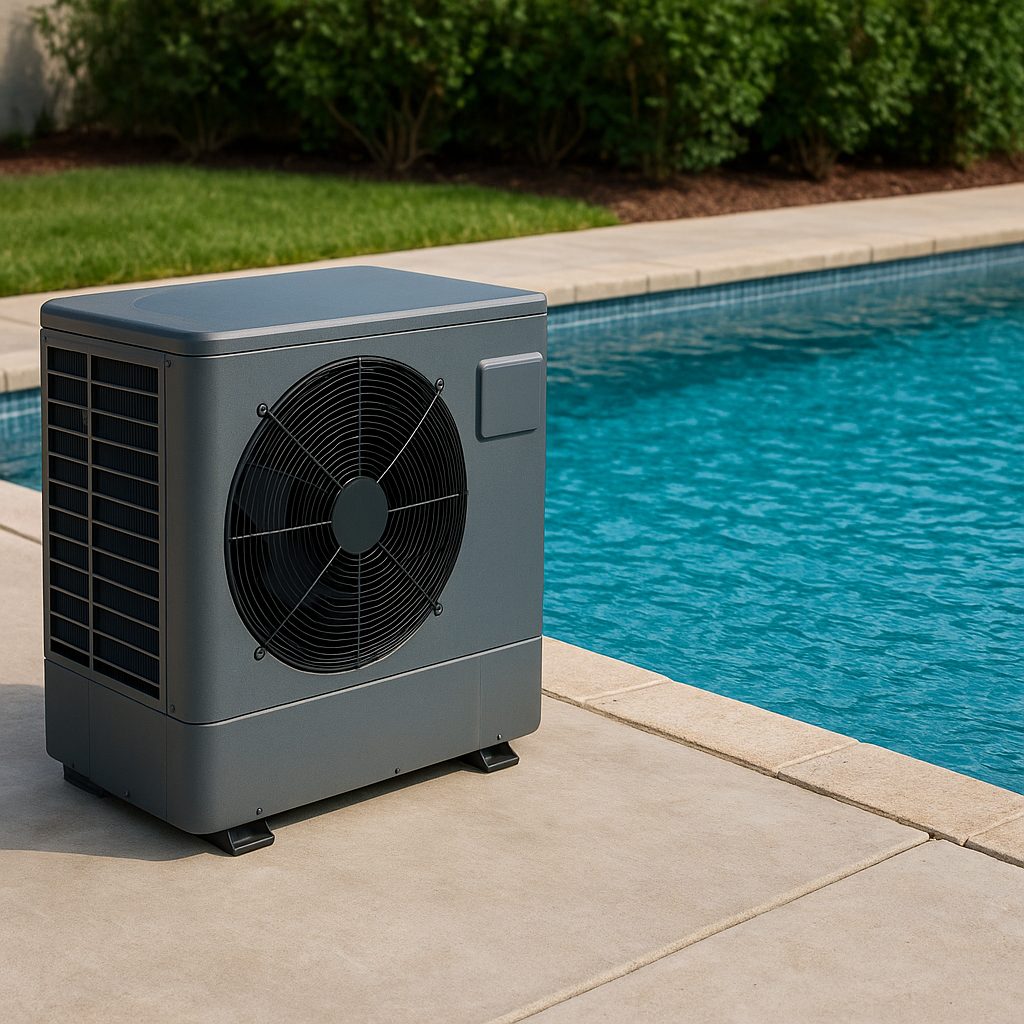
Choosing the right heat exchanger avoids unnecessary expenses and ensures hot water all year round. Furthermore, many people make mistakes due to a lack of simple information. Therefore, this guide helps you decide quickly and without confusion.
1. Determine the actual size of the pool.
Calculate the volume first. Without that, any choice becomes a guess. Therefore, you should avoid undersized or oversized models.
2. See the power rating indicated in BTU or kW.
Low power makes the system slow. On the other hand, too high a power increases initial consumption. Therefore, find the ideal setting for your water volume.
3. Consider the average temperature of your region.
Cold regions require more powerful models. Warm regions, on the other hand, allow for smaller models. This way, you reduce costs and improve overall performance.
4. Check the COP (coefficient of performance).
A high COP delivers real savings. Furthermore, a COP above 4 already indicates good efficiency. Therefore, use this number as a practical reference.
5. Assess the noise level.
Some models are too noisy. However, if the pool is near social areas, opt for quieter models. This improves comfort.
6. Check warranty and support.
Better equipment offers longer warranties. Furthermore, prompt support prevents delays and headaches when problems arise.
Conclusion
The right decision depends on a few key pieces of data, but they need to be accurate. Therefore, evaluate volume, power, climate, COP, noise, and warranty. This way, you avoid mistakes, save money, and ensure efficient heating all year round.