








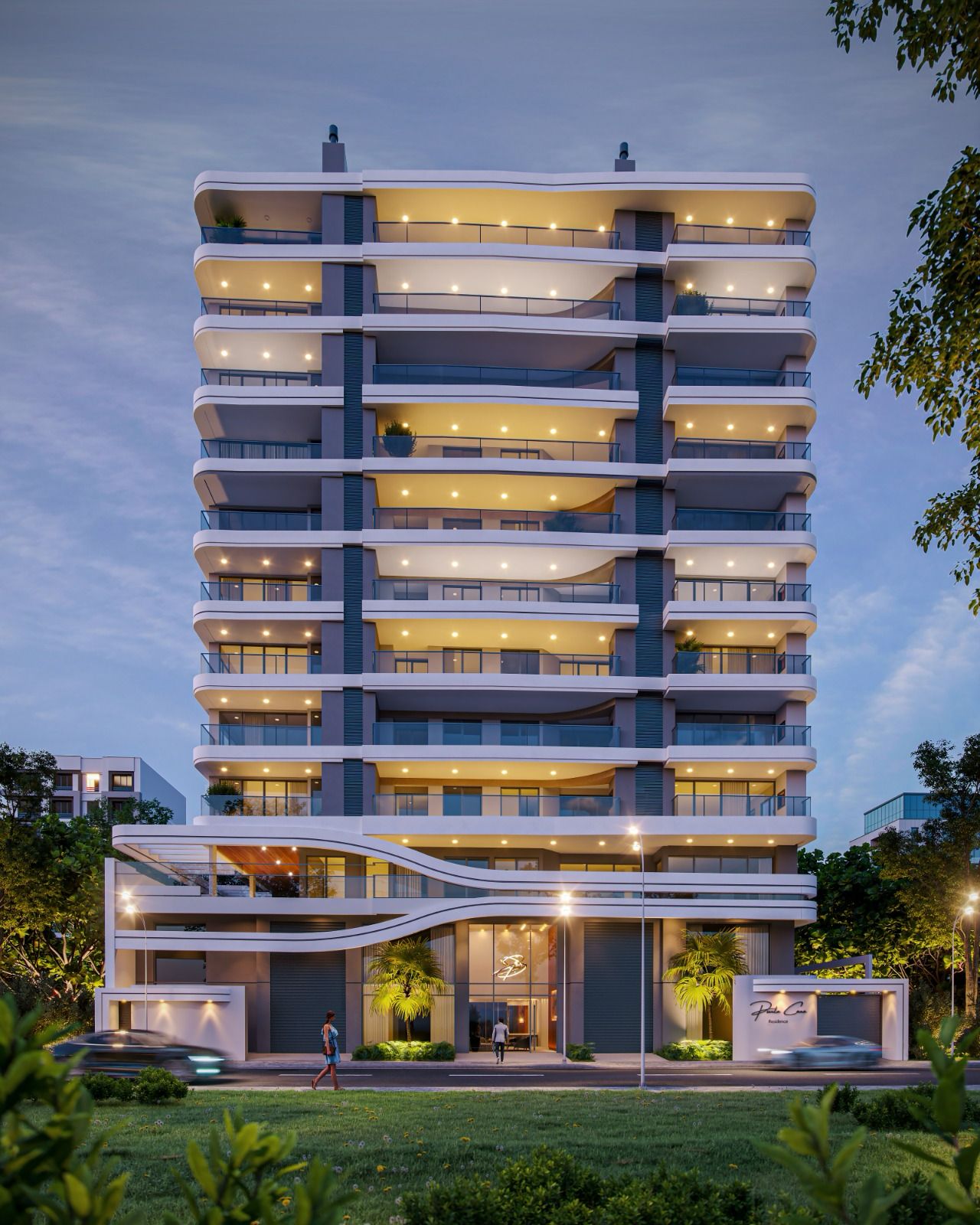

At the moment, 73% of residential buildings in Santa Catarina still use LPG (bottled gas).. However, it is considered an outdated system that, in addition to taking up space, requires constant maintenance and, consequently, generates high operating costs.
However, reality shows that many condominium owners and administrators They are unaware of the real benefits of transitioning to natural gas.. In this way, they end up maintaining an inefficient infrastructure which, consequently, compromises both the security as for operational economy of the building.
In this article, therefore, you will understand Why switching to natural gas is a strategic decision., In addition to understanding the costs involved, the return on investment, and how the transition occurs in practice, further information will be presented. Real-life examples of buildings in Santa Catarina who have already made this change. In the end, you will have all the information you need to make a technically, economically, and strategically sound decision.
What is natural gas?
Natural gas (NG) is a fossil fuel composed primarily of methane (CH₄). It is extracted from underground reservoirs and subsequently distributed to consumers via a pipeline. underground pipeline network, operated by local concessionaires, such as Celesc, in Santa Catarina.
Unlike LPG, which depends on cylinders and frequent replacements, natural gas is supplied. continuously, The water is supplied directly to the building, similar to water and electricity supply. Therefore, the consumer only pays for the volume actually consumed.
Furthermore, natural gas is lighter than air. Therefore, in case of a leak, it tends to rise and dissipate quickly. In addition, its operating pressure is lower than that of LPG, which makes the system... naturally safer. As a result, there is no need for storage, delivery scheduling, or risk of shortages.
LPG vs Natural Gas: A Complete Comparison
Before making any decision, it is essential to conduct a technical, economic, and operational comparison between the two systems.
Operating Cost
Firstly, the monthly cost is one of the factors that most impacts the decision.
Natural gas:
- Average value in SC: R$ 0.80 to R$ 1.20 per m³
- Average monthly consumption per apartment: 25 to 35 m³
- Estimated monthly cost: R$ 20 to R$ 42
LPG (Bottled Gas):
- Price of a 13 kg gas cylinder: R$ 60 to R$ 80
- Average duration: 15 to 20 days
- Estimated monthly cost: R$ 90 to R$ 160
Consequently, the monthly savings per apartment varies between R$ 48 and R$ 138. Therefore, in a building with 30 units, the annual savings can reach between R$ 17.280 and R$ 49.680, This reinforces the financial viability of the change.
Security
Besides cost, security is a determining factor, especially in multi-family buildings.
Advantages of Natural Gas:
- Lower operating pressure, reducing risks.
- Lower probability of explosions
- Continuous system, no need to handle cylinders.
- Constant monitoring by the dealership.
- Direct compliance with current technical standards.
Risks of LPG:
- High blood pressure
- Risk during gas cylinder exchange
- Need for proper storage
- More frequent periodic inspections
In this way, industry statistics indicate that Buildings using natural gas have up to 801% fewer gas-related accidents., when compared to those that use LPG.
Physical Space
Another important point is making the most of the available space in the condominium.
Natural gas:
- It only needs a wall connection.
- Eliminates the need for a central gas supply.
- It allows for the reuse of the previously occupied area.
LPG:
- Requires a central gas system with multiple cylinders.
- Minimum safety distances are required.
- It can occupy between 20 and 50 m² in small condominiums.
In practice, therefore, a condominium with 30 units can free up space equivalent to 1 or 2 parking spaces, which, in turn, can be converted into common or commercial areas.
Convenience in Everyday Life
From an operational standpoint, the impact on residents' daily lives is also significant.
Natural Gas offers:
- Continuous supply
- Lack of appointments
- Payment integrated into the monthly bill.
- Eliminating the risk of running out of gas.
LPG requires:
- Delivery scheduling
- Dependence on supplier availability
- Risk of supply shortages on holidays and weekends.
- Unpredictable costs during periods of higher consumption.
Thus, natural gas provides greater predictability and comfort in daily life.
Strategic Advantages of Natural Gas in Buildings
Beyond the direct comparison with LPG, natural gas offers strategic benefits in the medium and long term.
Property Appreciation
Real estate studies indicate that buildings with natural gas offer... appreciation between 5% and 8% at market value.
For example, an apartment valued at R$ 500,000 could reach between R$ 525,000 and R$ 540,000 After the system is modernized, the market begins to see the property as more modern, secure, and efficient.
Reducing Operational Costs
When the condominium is analyzed as a whole, the numbers become even more significant.
| Cost | LPG | Natural gas | Economy |
|---|---|---|---|
| Monthly gas | R$ 2.700 | R$ 600 | R$ 2,100/month |
| Annual inspection | R$ 1.500 | R$ 300 | R$ 1,200/year |
| Central maintenance | R$ 800/month | R$ 0 | R$ 9,600/year |
| Annual total | R$ 39.300 | R$ 7.200 | R$ 32.100 |
Therefore, after the first year — in which the initial investment occurs — the entire economy becomes recurring and predictable.
Sustainability
In addition to financial gains, natural gas is 30% to 40% less polluting that LPG. Thus, it contributes to:
- Reducing CO₂ emissions
- Eliminating the disposal of gas cylinders
- Alignment with ESG practices
For this reason, condominiums seeking environmental certifications find natural gas to be a strategic ally.
Implementation Costs
Naturally, the main question concerns the investment required for the change.
Total Investment – Example (30 units)
| Phase | Value |
|---|---|
| Project and licenses | R$ 5.000 |
| Civil works | R$ 75.000 |
| Materials and equipment | R$ 25.000 |
| Testing and certification | R$ 3.000 |
| Total | R$ 108.000 |
| Per unit | R$ 3.600 |
Return on Investment
Considering an average annual savings of R$ 32.100, The return on investment occurs in approximately:
R$ 108,000 ÷ R$ 32,100 = 3.4 years
After this period, therefore, the economy becomes liquid and recurring for decades.
Final Considerations
In summary, the migration from LPG to natural gas. It's not just a modernization., but rather a strategic decision.
The data clearly demonstrates:
- Savings of up to 80%
- Return on investment in 3 to 4 years.
- Greater security
- Property appreciation
- Regulatory compliance
Given this, the question ceases to be... “"it is worth it?"” and it definitively becomes:
Why haven't I done it yet?